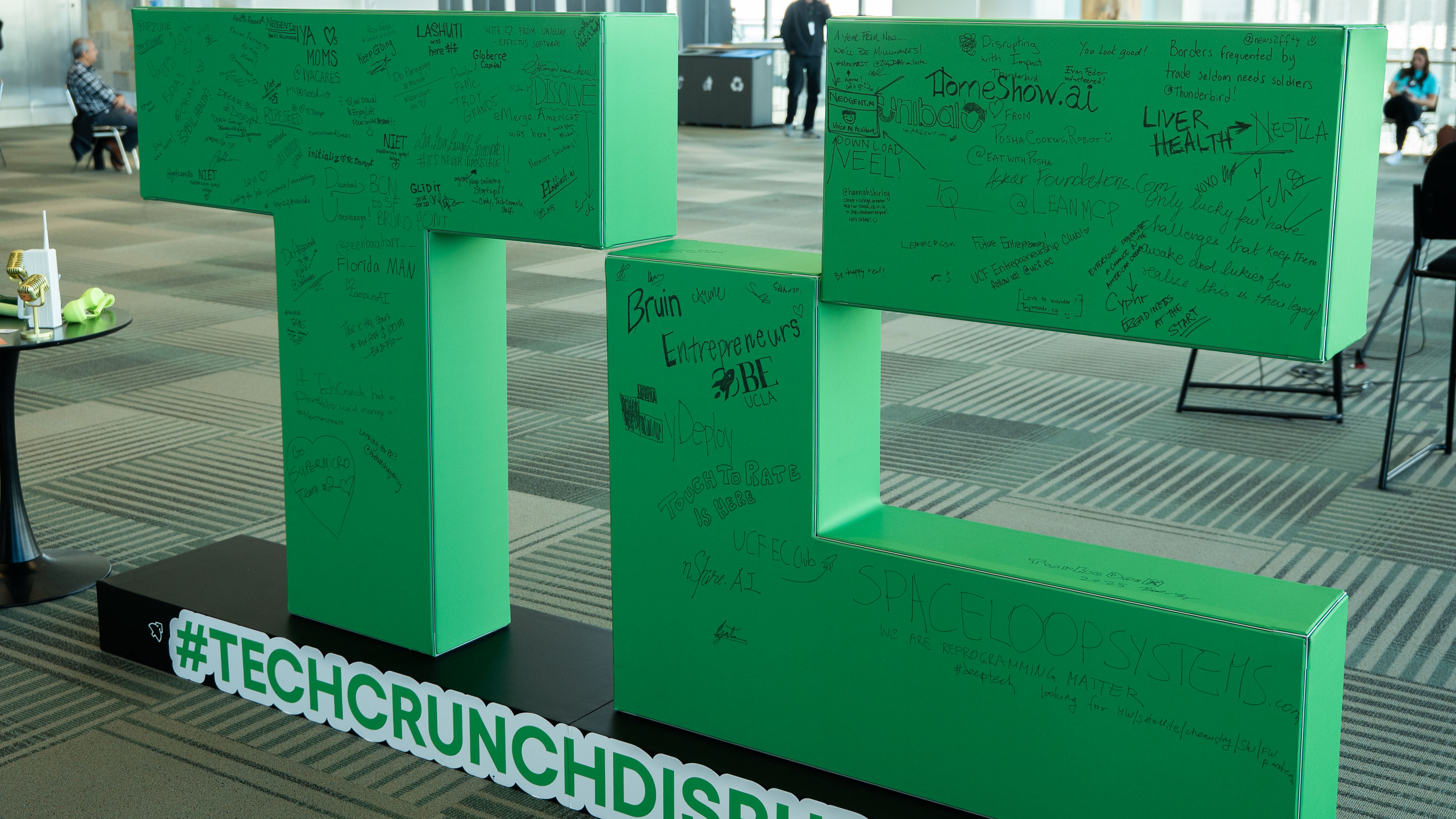
AI ran through almost every part of TechCrunch Disrupt 2025, held last week, October 27 to 29, in San Francisco. Beyond a dedicated AI Stage, AI topics filled sessions on the main Disrupt Stage, the Builders Stage and in roundtables. Speakers included leaders from ElevenLabs, Mercor, Box, Waabi, Wayve, Hugging Face and Character.AI, as well as prominent investors. Rather than new model breakthroughs, most of the conversation focused on business questions: where value will settle, which markets already have winners and how to tell durable revenue from hype.
Revenue quality was one of the clearest themes. Investor Elad Gil said some AI markets already have clear leaders, including foundation models, AI coding, medical scribing and customer support, while areas such as fintech tooling, accounting and AI security remain open. He warned that rapid revenue growth can be a false signal because enterprises are trialing many tools at once. On a product-market-fit panel, Iconiq's Murali Joshi said one of the best signals to watch is "durability of spend," meaning whether AI moves from experimental budgets into core budgets. On an AI Stage panel about what VCs want, Cowboy Ventures' Aileen Lee called the current moment "a funky time" for AI investing, with some companies going from zero to $100 million in revenue in a single year.
Agents and commoditization shaped the product discussion. Box CEO Aaron Levie argued that agents will not replace SaaS but will work on top of it, with per-seat pricing giving way to consumption pricing. ElevenLabs CEO Mati Staniszewski said AI audio models, his company's core technology, will become commoditized over time, and that ElevenLabs will keep building models while also building products on top of them. Mercor CEO Brendan Foody explained that AI labs hire former bankers, lawyers and consultants through Mercor because companies will not hand over their own data. TechCrunch reported that Mercor had reached roughly $500 million in annualized revenue and pays contractors more than $1.5 million a day; the company announced a $350 million Series C at a $10 billion valuation on October 27, the first day of the conference.
Physical AI generated the most concrete announcements. Waabi unveiled an autonomous truck built with Volvo, and CEO Raquel Urtasun said the company aims to run commercial trucks without a human driver or observer on board. Wayve CEO Alex Kendall told TechCrunch backstage that he has been urging automakers to adopt Nvidia's Hyperion platform. Consumer AI safety also surfaced: on October 29, the day CEO Karandeep Anand appeared on the AI Stage, Character.AI announced it would end open-ended chats for users under 18. On the broader impact on work, Zoom's Eric Yuan set a goal of a three- to four-day workweek within about five years, while Vinod Khosla suggested the government could take a 10% stake in public companies to share AI gains.
Startup Battlefield offered a telling contrast. More than half of the Top 20 companies described their products in terms of AI in TechCrunch's pre-event profiles. Yet only one of the five finalists, runner-up Nephrogen, was built primarily around AI, using it to develop a delivery system for gene-editing medicines in the kidney. The winner, Glīd, is a hardware-first freight company whose EZRA-1SIX software, which the company describes as an AI logistics orchestration platform, coordinates its road-to-rail vehicles. Kevin Rose, who also judged the final, said in a separate onstage interview that people will one day look back on this period and say, "We just slapped AI on everything, and thought it was a good idea."
An entrepreneur with over a decade of experience in AI, Cloud, and HPC. He is currently a DevOps Architect and the founder of Data Phoenix, an influential media voice for the AI industry, with a strong focus on community building and open source.