AWS releases six open-source Hugging Face deployment skills for SageMaker
AWS has released six open-source skills that guide coding agents through Hugging Face deployments on SageMaker, from setup and container selection to scaling, monitoring and teardown.
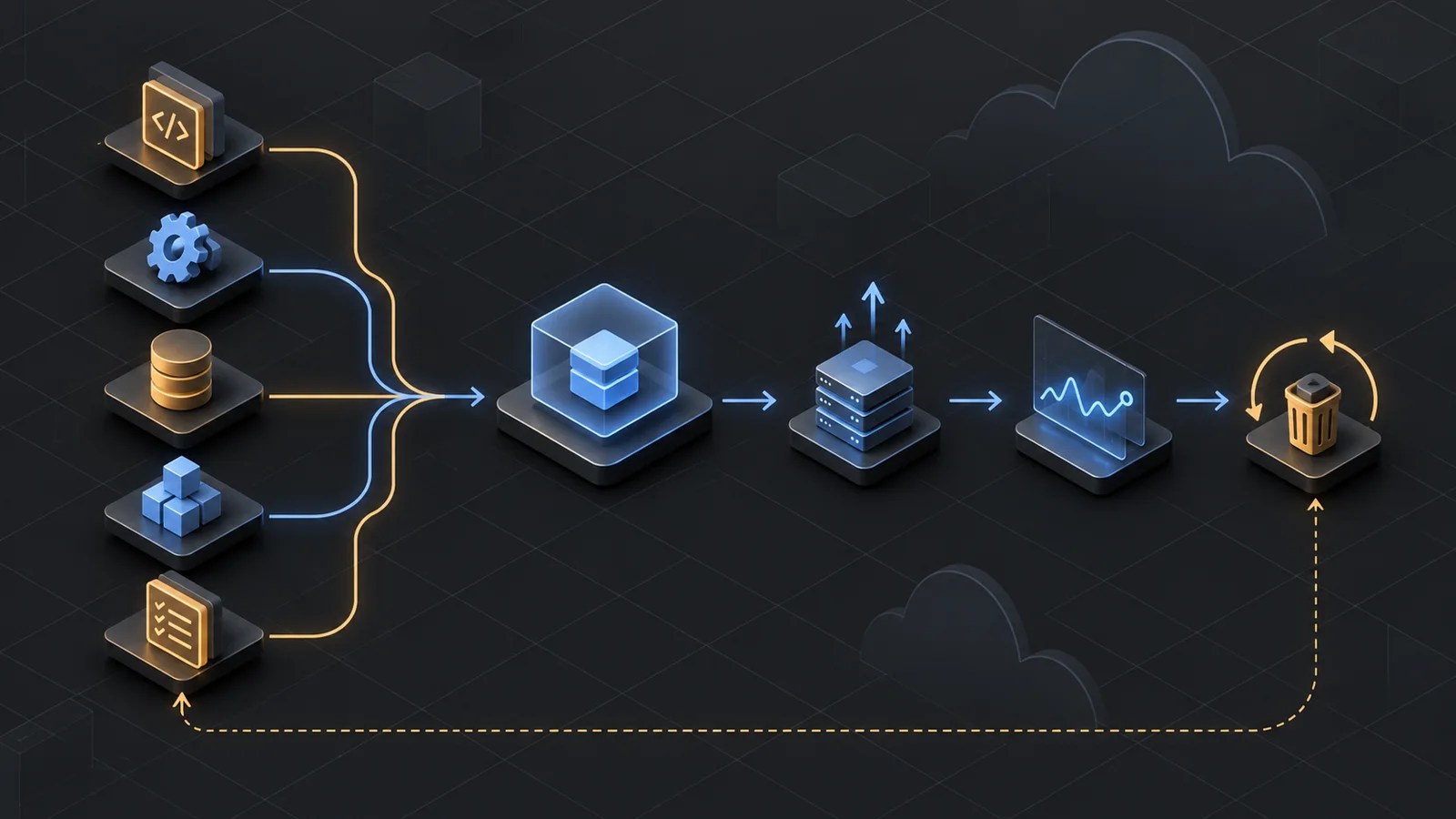
AWS has released six open-source skills to guide coding agents through deploying Hugging Face models on Amazon SageMaker AI. Rather than leave agents to choose infrastructure without guidance, the skills provide a prescribed workflow for recurring deployment decisions.
Together, the skills cover deployment planning, AWS context discovery, Python environment setup, IAM preflight checks, serving-image selection and production defaults. A planner coordinates the other five, while the coding agent still makes decisions within the workflow.
The release focuses on model-serving endpoints rather than the cluster-management layer covered in DataPhoenix’s earlier report on agent-driven SageMaker HyperPod cluster operations.
At the repository commit used in AWS’s walkthrough, the planner provides scripted paths for real-time inference, real-time endpoints that can scale to zero and asynchronous inference. Serverless inference, batch transform and Amazon Bedrock Custom Model Import receive a guided handoff rather than a scripted deployment path.
The production-defaults skill treats the model, endpoint configuration, endpoint, autoscaling target and policy, and CloudWatch alarms as one deployment unit. AWS documentation says SageMaker endpoint autoscaling supports target-tracking and step-scaling policies. Its CloudWatch documentation lists invocation-error, model-latency and overhead-latency metrics that can be used for alarms.
Before an agent reports success, the workflow requires a real test invocation and a scan for worker-crash markers. An endpoint’s InService status alone is not treated as proof that the model works.
AWS said its worked example deployed Qwen/Qwen3-0.6B to one ml.g5.xlarge instance in the us-east-1 region, selected a Hugging Face vLLM container, attached autoscaling and three CloudWatch alarms, completed a smoke test and verified resource teardown. The research for this article did not independently reproduce those results.
AWS also said unguided tests with Kiro and Claude Code initially selected TGI for Qwen3, encountered health-check failures and omitted autoscaling and monitoring. The comparison was an AWS-authored demonstration, not an independent benchmark.
AWS describes the guided workflow as production-ready, but the pinned production-defaults skill says users still need deployment-specific controls such as VPC and KMS configuration. The skills provide defaults and guardrails, while production suitability depends on each deployment’s requirements. The pinned Hugging Face Skills repository carries the Apache License 2.0.
More news

AWS launches SageMaker inference skill for coding agents

AWS adds instance preference lists to SageMaker AI jobs

AWS adds HyperPod Spaces controls to SageMaker Studio