California expands behavioral-health county profile built on Databricks
California expanded its statewide Behavioral Health Public County Profile with final county plans, performance measures and statewide reporting, while Databricks detailed the data platform behind it.
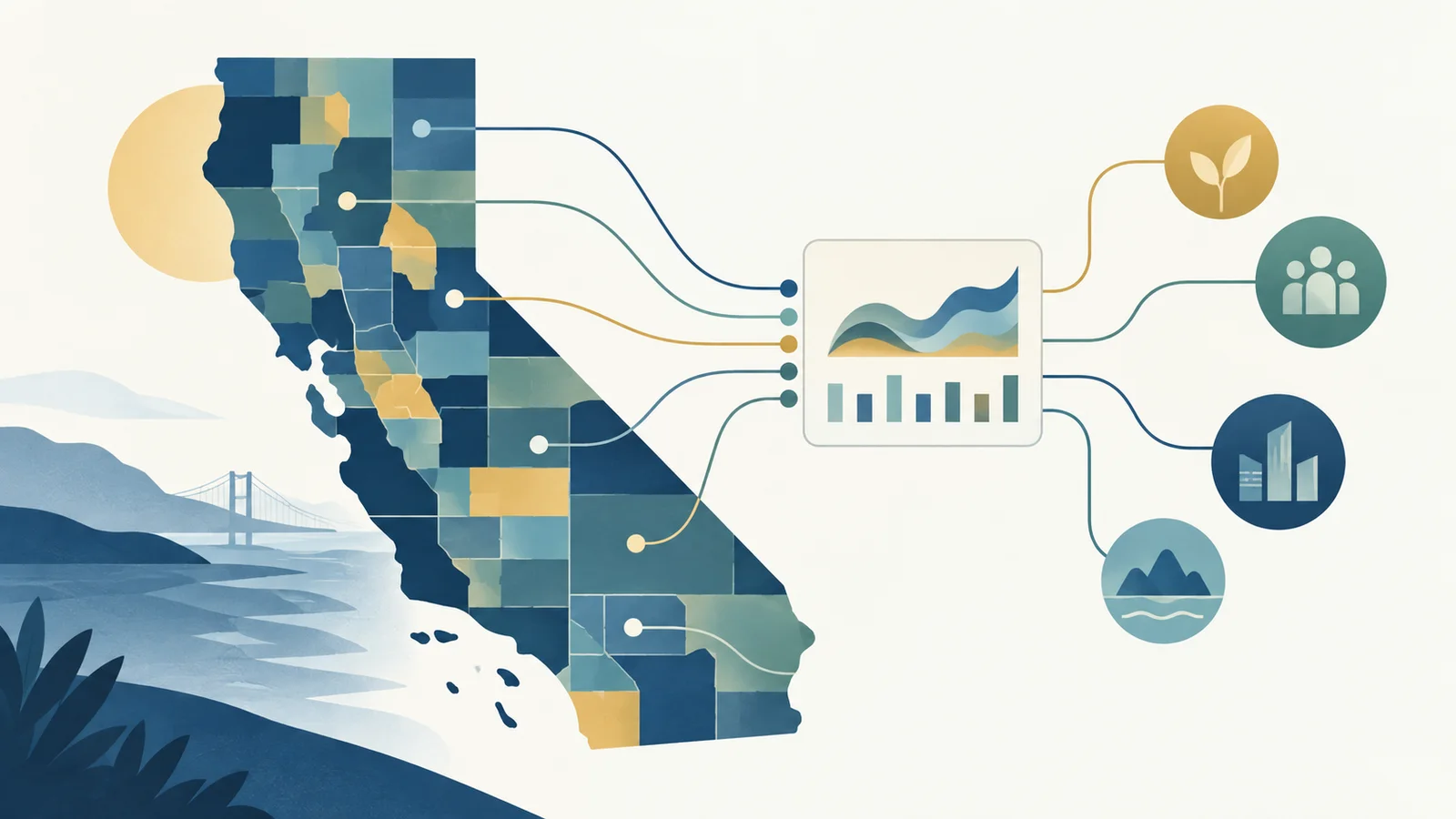
California’s Department of Health Care Services expanded its Behavioral Health Public County Profile on October 1, adding final county plans, performance measures and statewide reporting to the public dashboard.
The update gives residents and policymakers one place to examine behavioral-health planning, funding and service delivery across California’s 58 counties. It expands a profile that was already public rather than marking the dashboard’s first release. DHCS said the first iteration launched May 28 with county demographics, homelessness and housing-related information, and draft Integrated Plan submission statuses.
The expanded profile publishes exportable information from counties’ final three-year Behavioral Health Services Act Integrated Plans. The data covers county priorities, projected expenditures across BHSA funding sources, program investments and anticipated numbers of people served. It also includes county utilization rates for a subset of BHSA performance measures.
Statewide sections add reporting on BH-CONNECT funding and county participation, Lanterman-Petris-Short Act involuntary-treatment activity, opioid-related deaths and health-care use, and CARE Act petitions and outcomes. California moved from the Mental Health Services Act to the BHSA framework on July 1, tying county investments to statewide goals for equity, outcomes and transparency.
Databricks said DHCS built the profile on its platform to combine data from all 58 counties for internal analytics and the public application. According to the vendor, the implementation uses Spark Declarative Pipelines and Lakeflow Connect for ingestion, Semantic Views for shared metric definitions, serverless compute, and data-quality and lineage tools in a FedRAMP-authorized environment.
For broader platform context, DataPhoenix has also covered Databricks’ recent work on governed data federation. The state materials reviewed do not independently confirm the named Databricks products or architecture.
DHCS says it plans to add datasets, reporting tools and more performance measures over the coming year. At a May stakeholder meeting, a participant cautioned that standardized county comparisons could mislead without local context because Medi-Cal populations and funding streams differ. DHCS responded that the profiles provide a broad view and that later phases would add more metrics.
More news

Databricks opens frontier models to more than 12,000 employees

Databricks releases Funke for native HL7v2 parsing

Asana says browser-agent redesign cut test costs 76x