Databricks opens frontier models to more than 12,000 employees
Databricks says it gave more than 12,000 employees day-one access to new frontier models, then used per-user budgets, benchmarks, feedback and cost traces to decide within three days whether to promote them.

Databricks said it gave more than 12,000 employees day-one experimental access to newly released frontier models, routing their use through Unity Gateway and charging it against a dedicated part of each user’s budget. The company described the rollout in a September 28 account of its internal process; the employee count and access scope have not been independently audited.
Within three days, Databricks said it had gathered enough benchmark, feedback and cost data to make the evaluated models generally available. The staged process gave employees immediate access while keeping experimental models separate from default tools until the company reviewed the evidence.
Databricks described three release stages: companywide experimental availability, a per-user usage constraint, and a decision to remove a model, make it generally available or promote it to a default role. The company said all internal model traffic passes through Unity Gateway, its central layer for permissions, cost controls, usage records and model designations.
The company distributes configurations through its Unity Gateway CLI, which it said is deployed to employee laptops through mobile-device management. When a worker starts Claude Code, Codex or Omnigent, the tool checks for updates to approved models, tools and skills. The arrangement lets Databricks change access centrally. Its coding-agent governance documentation says coding-agent requests can route through Unity Gateway without provider API keys on developer machines, with Unity Catalog permissions, rate limits, spend budgets and centralized usage records.
Databricks said each employee’s model allowance is divided into four buckets: a monthly maximum, a daily runaway limit, a quality-frontier allocation and an experimental-model allocation. New releases draw from the experimental bucket during evaluation. Separate Unity Gateway budget documentation says the service can apply monthly thresholds per user and alert or block requests when a threshold is reached, while cautioning that enforcement is approximate rather than an absolute cap on final cost.
Promotion decisions use three signals, according to Databricks: private offline and online benchmarks, quality reports collected through Slack and surveys, and cost data from centrally collected OpenTelemetry traces. The company’s usage-tracking documentation says Unity Gateway records request and response details, including token and latency metrics, and provides dashboards for analyzing consumption and cost by user.
For its cost comparison, Databricks said it held the early-adopter cohort constant, normalized spending per session, separated single-turn from multi-turn sessions and distinguished sessions with file edits. It then reweighted the mix of session types. The company reported a reweighted average of $4.23 per session for Opus 5.5, compared with $5.94 for Opus 4.8, a 29% reduction. It reported $2.34 for GPT-6 Sol versus $4.52 for GPT-5.6 Sol, a 48% reduction. The underlying traces, sample sizes and statistical uncertainty were not published, so the figures have not been independently reproduced.
Databricks said the review led it to move the evaluated models into standard circulation after three days. It planned to set Opus 5.5 as the Claude Code default, while retaining GPT-5.6 Sol as the Codex default and adding GPT-6 Sol to a smart router because of the reported cost advantage. The post refers to Opus 5 in some sections and Opus 5.5 in others, and it uses both Sol 6 and GPT-6 Sol; the opened sources do not resolve whether those labels describe the same releases.
More news

Uber begins ChatGPT Work rollout for more than 30,000 employees
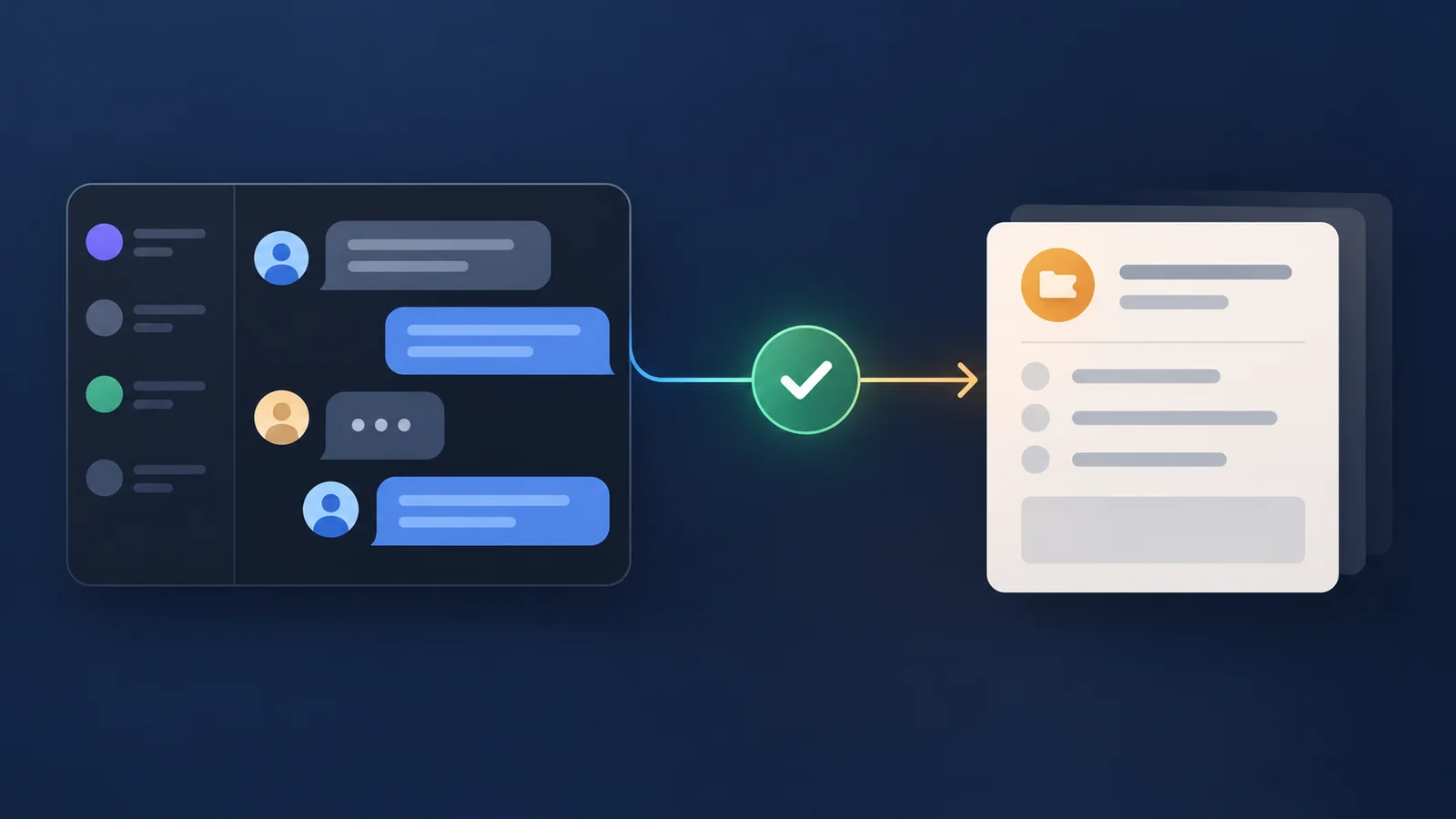
ShipStation details Deckhand’s Slack workflow and Jira safeguards

IBM survey finds 80% report AI escalation, 40% cite governance changes