Canva launches Craft image model with two-stage design architecture
Canva launched Craft, an in-house image model that plans each composition before rendering, with access through Dream Lab and a public API.
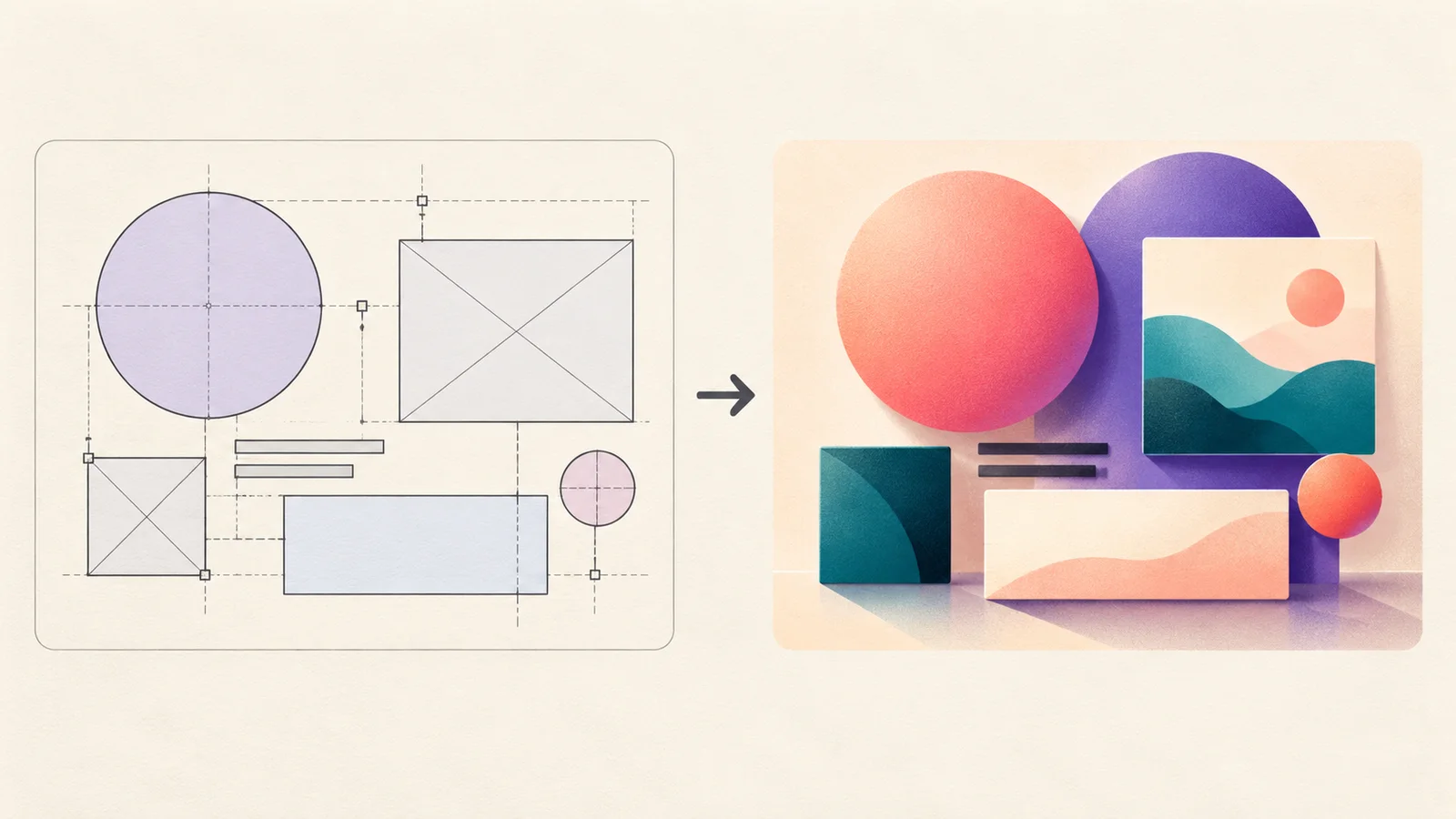
Canva launched Craft, its first image-generation foundation model built and trained in-house. Available globally through Dream Lab and a public API, the model separates planning from rendering. Canva says that split is designed to give users more control over complex layouts and support editing after generation.
Craft’s first stage turns a prompt into a composition plan, mapping the image’s elements, spatial relationships, relative scale, visual hierarchy and text. A second model renders the image from that plan. In other words, one stage decides where the parts should go before the other draws them.
Canva says the approach improves object placement, text legibility and consistency in complex designs. It also allows users to change individual elements without regenerating the entire image. Craft can produce structured output, including JSON bounding boxes, designed to work with Magic Layers, Canva’s system for turning generated images into editable design elements.
That emphasis on post-generation control follows other image-tool launches built around design workflows, including Magnific One’s Brand Kit controls. Craft differs by making composition planning and structured output part of image generation itself.
The company says Craft renders images at up to 2K resolution in more than 30 aspect ratios. Canva also says the model accepts prompts in any language and can generate text in 55 languages. The supplied materials do not disclose Craft’s parameter count or provide enough detail about its evaluation methodology for an independent assessment.
According to Canva, Craft’s training emphasized design and included millions of human-made Canva templates, followed by supervised fine-tuning and reinforcement learning. The company says its designers and researchers evaluated more than 25,000 image pairs against other leading models. It also claims that a custom inference engine made the planning stage an order of magnitude faster than its first internal version.
Canva’s developer documentation lists CRAFT-1 2K as craft_v1_2k in a preview image-generation API. The API creates asynchronous jobs and can optionally save completed images to a user’s Canva account. Canva says Canva MCP support is coming soon, while lower-cost Craft-fast and Craft-ultrafast variants are planned.
More news
Magnific launches Magnific One image generator with Brand Kit controls
OpenAI plans visual ads for ChatGPT image generation
OpenAI launches ChatGPT Images 2.5 and two API models
Google launches Gemini Omni Flash video model and Nano Banana 2 Lite for developers
 Dmytro Spodarets·Jun 30, 2026