Databricks makes AI Index public for model spending and coding agents
Databricks has opened its AI Index to the public, pairing Unity Gateway adoption and estimated-spending data with weekly coding-agent cost and quality evaluations.
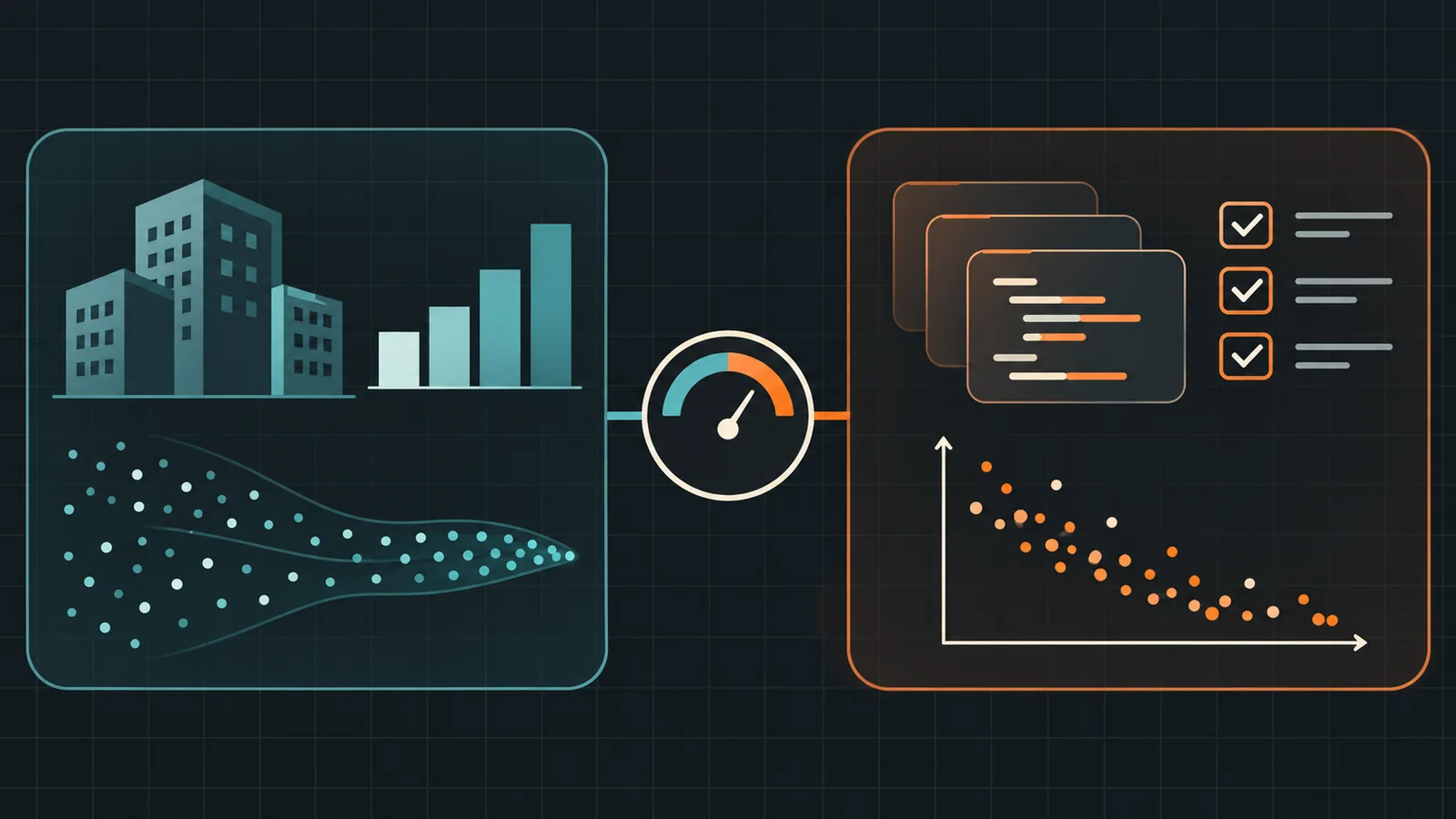
Databricks launched a public AI Index on Nov. 16, making its measurements of enterprise model use, estimated spending and coding-agent performance publicly available. The company said it will update the resource weekly as it evaluates new proprietary and open-weight models.
The index combines two distinct Databricks-controlled data sources. Its adoption and spending views use aggregated, anonymized traffic from more than 10,000 companies using Unity Gateway. Its coding results come from Databricks engineering workflows and tasks built from the company’s private codebase. Neither dataset is a market-wide measurement.
The usage portion includes traffic routed through Unity Gateway to external providers such as Anthropic and OpenAI. The live index calculates wallet share and weekly per-user spending by applying providers’ published list prices to input, cached and output tokens. Databricks said those figures are estimates based on published list prices, not amounts it bills.
Within that Unity Gateway cohort, Databricks reported that the share of active enterprises relying on a single model provider fell from about 64% in July to 28% by Nov. 2. It also said open-weight models’ share of measured token traffic rose from 7.3% in July to 30.9% in November. Those results cover activity seen through Databricks’ platform, not enterprises that buy or run models elsewhere.
The coding portion uses real internal pull-request tasks, withheld tests and combinations of models with the Claude Code and Codex harnesses. A harness is the agent software that supplies tools and context around a model. Databricks determines correctness with tests rather than an AI grader and said private-codebase tasks reduce the risk that benchmark solutions entered model training data. Its July methodology post described the benchmark as non-comprehensive and tied to the company’s codebase and task mix.
Databricks said its latest benchmark covered models from nine AI labs and placed five models from OpenAI, DeepSeek, Meta and Anthropic on its cost-quality frontier. In one comparison, GPT-6 Luna and Claude Opus 5.5 each completed 89.1% of tasks, while Databricks calculated average costs of $0.05 and $1.62 per task, respectively. The company also reported a 96.0% success rate at $7.47 per task for Claude Fable 5.1, compared with 94.9% at $1.53 for Muse Wonder.
The spending data showed a wide range within the measured cohort. Databricks reported median weekly AI spending of $2.49 per human user and 99th-percentile spending of $699.74, based on the same public-list-price method.
Databricks said the launch dataset covers Sept. 21 through Nov. 7. The live index labeled its usage, multi-provider and spending charts as updated Nov. 2 and its coding frontier as updated Nov. 10. The published materials do not give the exact number of companies included in each filtered time series or the current coding benchmark’s task count, run count, confidence intervals or statistical-significance thresholds.
More news

Databricks opens frontier models to more than 12,000 employees
Databricks launches always-on Genie for long-running enterprise work

Harvard study ties coding-agent gains to heavier code review