Databricks opens Genie ZeroOps public beta with pull-request workflow
Databricks moved Genie ZeroOps from limited private preview to public beta, adding shared access, notifications, custom instructions and a human-confirmed workflow for pushing proposed pipeline fixes to Git branches for review.
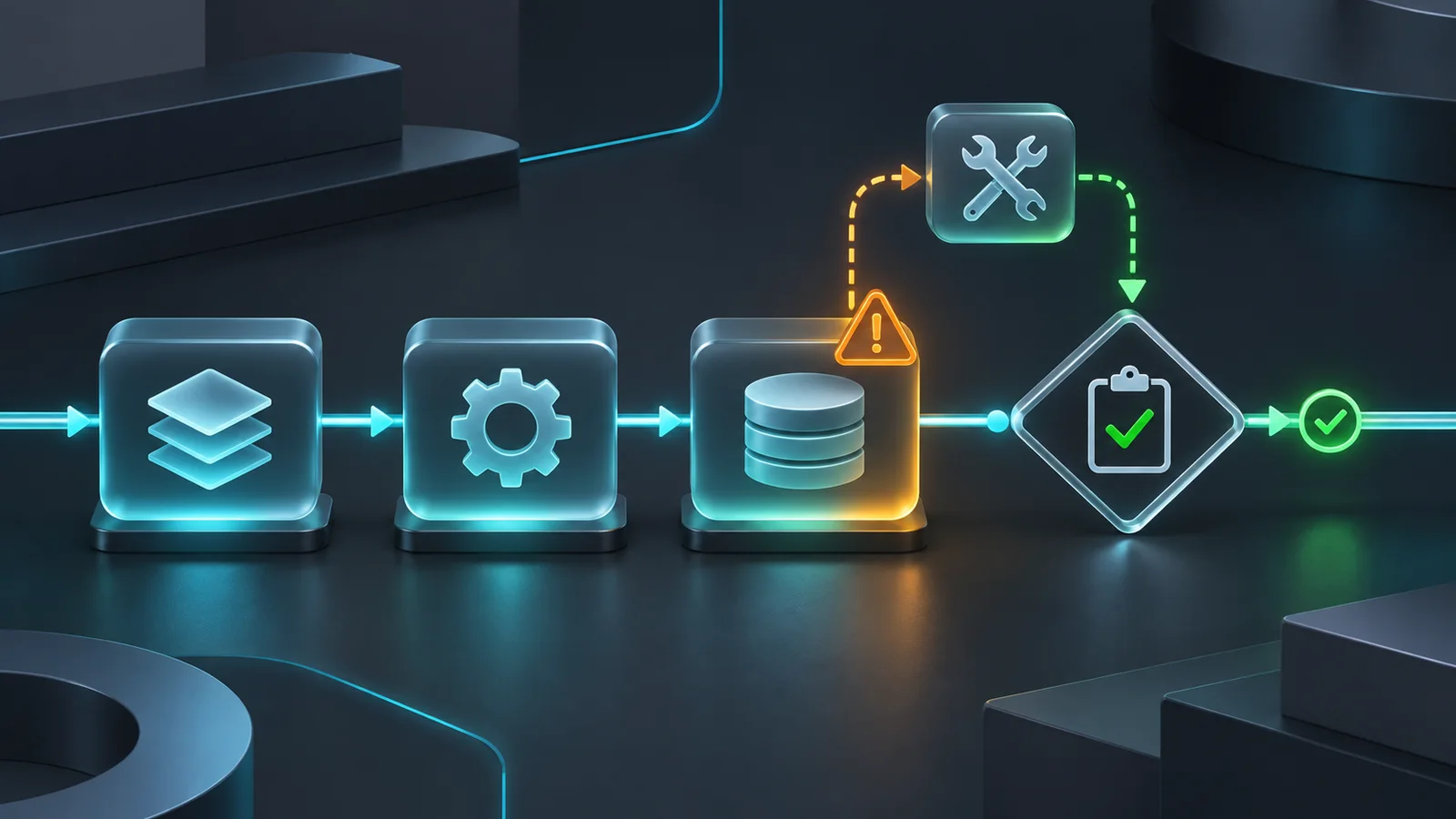
Databricks opened Genie ZeroOps to public beta on November 19. The agent monitors selected jobs, pipelines and tables for failures and data-quality issues. The beta adds shared access, external notifications, custom investigation instructions and a workflow for sending proposed code fixes to Git branches for pull-request review. A workspace administrator must enable the feature from the Previews page.
Databricks describes the workflow in five stages: detect, investigate, verify, notify and remediate. To identify a root cause, Genie ZeroOps can use logs, source code, table metadata and lineage. It can then test proposed changes with unit tests and sandbox dry runs before recommending them. Databricks says the tests do not apply changes to production and that access to Unity Catalog, metadata, lineage, logs and run history improves diagnosis and remediation quality.
During its limited private preview, the company says Genie ZeroOps observed more than 80,000 customer issues across hundreds of companies. Databricks says more than half required organization-specific knowledge to triage, rank or resolve. It did not publish the underlying dataset, measurement method, false-positive rate, accuracy results or successful-remediation rate in the reviewed material.
Teams can share a ZeroOps configuration with up to 25 individual workspace users. Shared users can review root causes and proposed fixes, continue an investigation in their own threads and mark an insight as not an issue, but they cannot change the monitored scope, sharing list or notification settings. Groups and service principals are not supported. Notifications can go to Slack, Microsoft Teams, PagerDuty or a generic webhook; email is not supported.
Custom instructions can direct the agent to check conditions such as upstream freshness or follow preferred remediation rules. Databricks setup documentation says those instructions apply only to new investigations, cannot override safety controls or tool permissions, and are limited to the first 20,000 characters.
For a Git-backed job, Genie ZeroOps can prepare a change and display a Create PR option. It pushes a commit to a new branch or a branch named by the user only after the user requests and confirms the action, then can provide a link for opening a pull request through the team’s normal review process. Repository credentials need read access for investigation and write access to push a fix. Branch-protection rules can block the push.
Human confirmation does not by itself guarantee pull-request review. If a user names an unprotected default branch, the agent can commit directly to it. Databricks recommends branch protection when review must be enforced and says the agent does not write to repositories in the background or force-push existing history.
According to Databricks, ZeroOps can process repository contents and query tables the configuring user may access. The company says Anthropic and OpenAI models run through Databricks-hosted endpoints inside its security perimeter, that model calls remain in the workspace region, and that model providers do not retain prompts or responses. The reviewed sources did not include an independent audit of those assertions.
Insights are private by default, but sharing can expose material included in an insight. Databricks warns that shared users can see code excerpts, suggested fixes and sample data rows even when they cannot access the underlying assets. Documentation says ZeroOps checks notification titles and summaries for sensitive information such as names and email addresses and masks what it finds; copies sent to external systems are outside Databricks retention and deletion controls.
The beta currently monitors jobs, pipelines and tables, not models or apps, and does not detect performance or cost regressions. It operates at workspace rather than account level, is not HIPAA compliant, and requires separately billed data-quality monitoring for table-quality detection. Databricks release notes listed Genie ZeroOps as Beta on November 12, seven days before the public-beta announcement; the notes say staged releases can take a week or more to reach an account.
More news
Polars brings distributed queries to existing Ray clusters
Apache Airflow 3.4.0 adds bounded task loops and AI agent workflows

MotherDuck says its Azure service is live in two regions