Google, Meta and Isomorphic Labs commit $300 million to Biohub virtual-cell effort
Google DeepMind, Meta and Isomorphic Labs committed $300 million to Biohub's Virtual Biology Initiative, which forms part of a $1.8 billion effort to build shared biological datasets for predictive cell models.
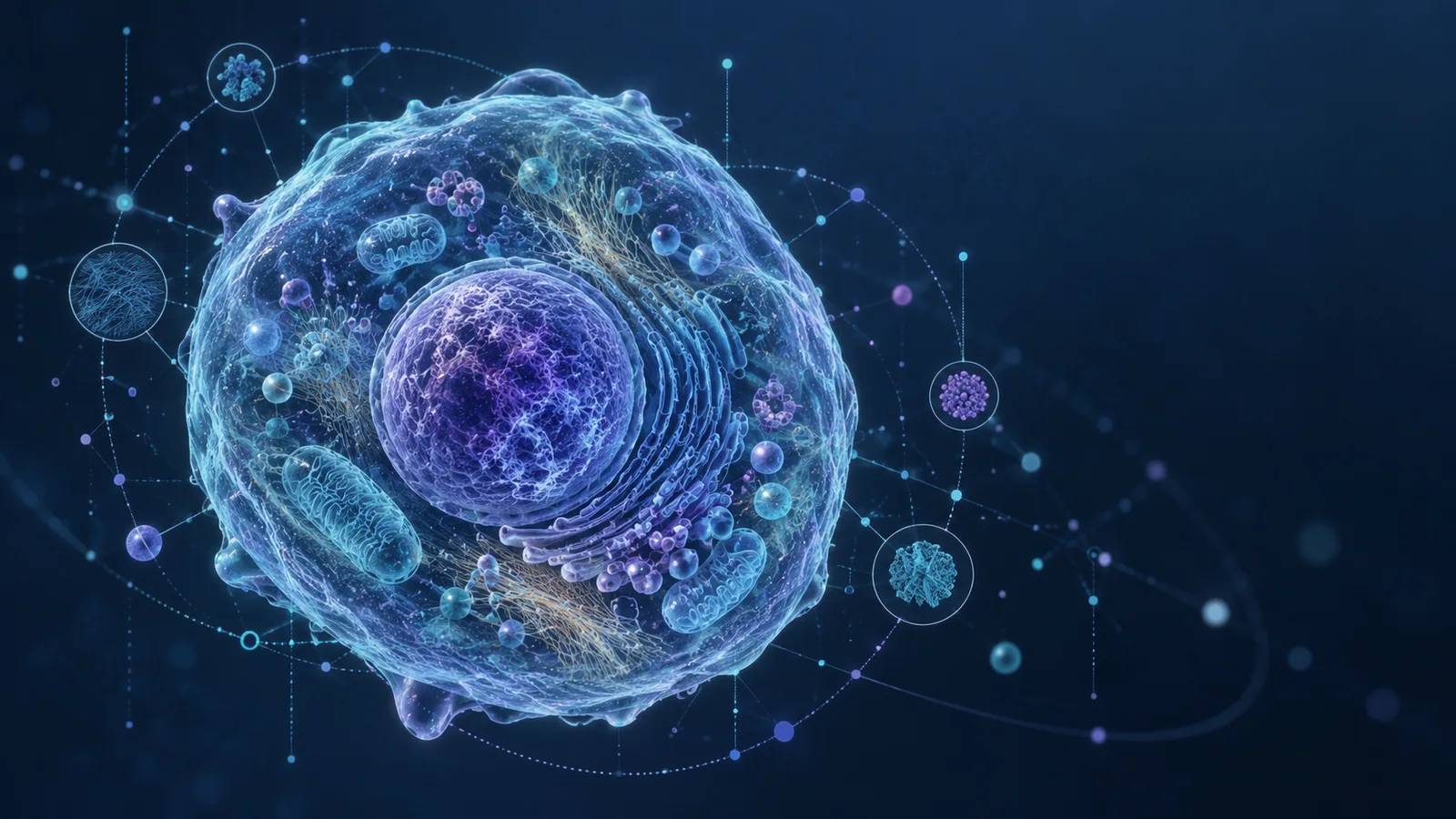
Google DeepMind, Meta and Isomorphic Labs have collectively committed $300 million to Biohub’s Virtual Biology Initiative. The project is intended to generate shared biological datasets for AI models that predict how cells respond to disease and potential treatments.
Biohub values the wider effort at $1.8 billion. That total combines new commitments, prior federal investment and existing resources, including data, computing capacity and measurement technology; it is not a single pool of newly committed cash. The official materials do not say how the three companies will divide their $300 million contribution.
The U.S. Department of Energy plans to contribute more than $500 million over five years through biological measurement, AI analytics, modeling, computing and national-laboratory capabilities. Separately, the National Institutes of Health will coordinate datasets, repositories and knowledge bases developed through more than $500 million in prior federal investment. Biohub is expected to help standardize appropriate datasets for AI training, meaning the NIH-linked amount is not a new appropriation.
Biohub launched the initiative in April with a $500 million commitment of its own over five years. It allocated $400 million to measurement and engineering technologies and internal data generation, and $100 million to outside research and coordinated data generation.
The initiative aims to measure how many kinds of cells respond to interventions across a wider range of conditions, then organize those observations with shared standards, identifiers and access systems. Its multimodal datasets, which combine several types of biological measurement, are intended to train virtual-cell models that can forecast a cell’s behavior before researchers run a physical experiment. For related context on shared biological data, DataPhoenix has also covered an open viral-protein dataset coalition.
For now, the scientific benefits remain prospective. The official materials do not show that the expanded initiative has produced a validated universal cell model, shortened drug development or improved patient outcomes. They also do not define quantitative benchmarks for an accurate virtual-cell model.
More news

Arceus Legal raises $17 million to expand its AI-assisted law firm

SoftBank completes final $10 billion OpenAI investment tranche
EliseAI raises $350 million at a $4 billion valuation