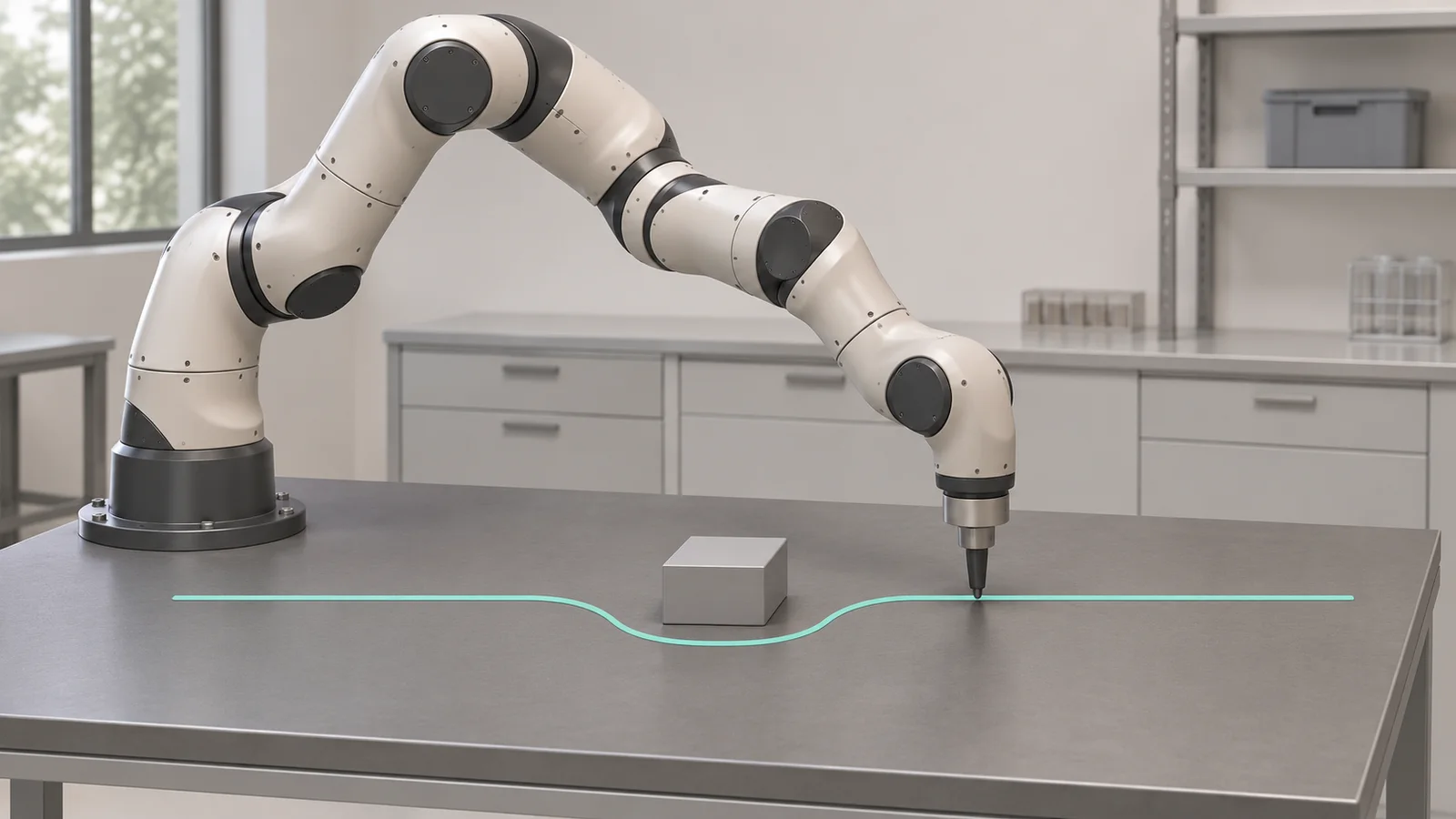
Researchers report higher RoboTwin success after tuning about 1.1% of Zero-WAM
The HeadLight preprint reports 62.28% average success across six simulated tasks, compared with 58.66% for low-rank adaptation at a similar trainable parameter count.
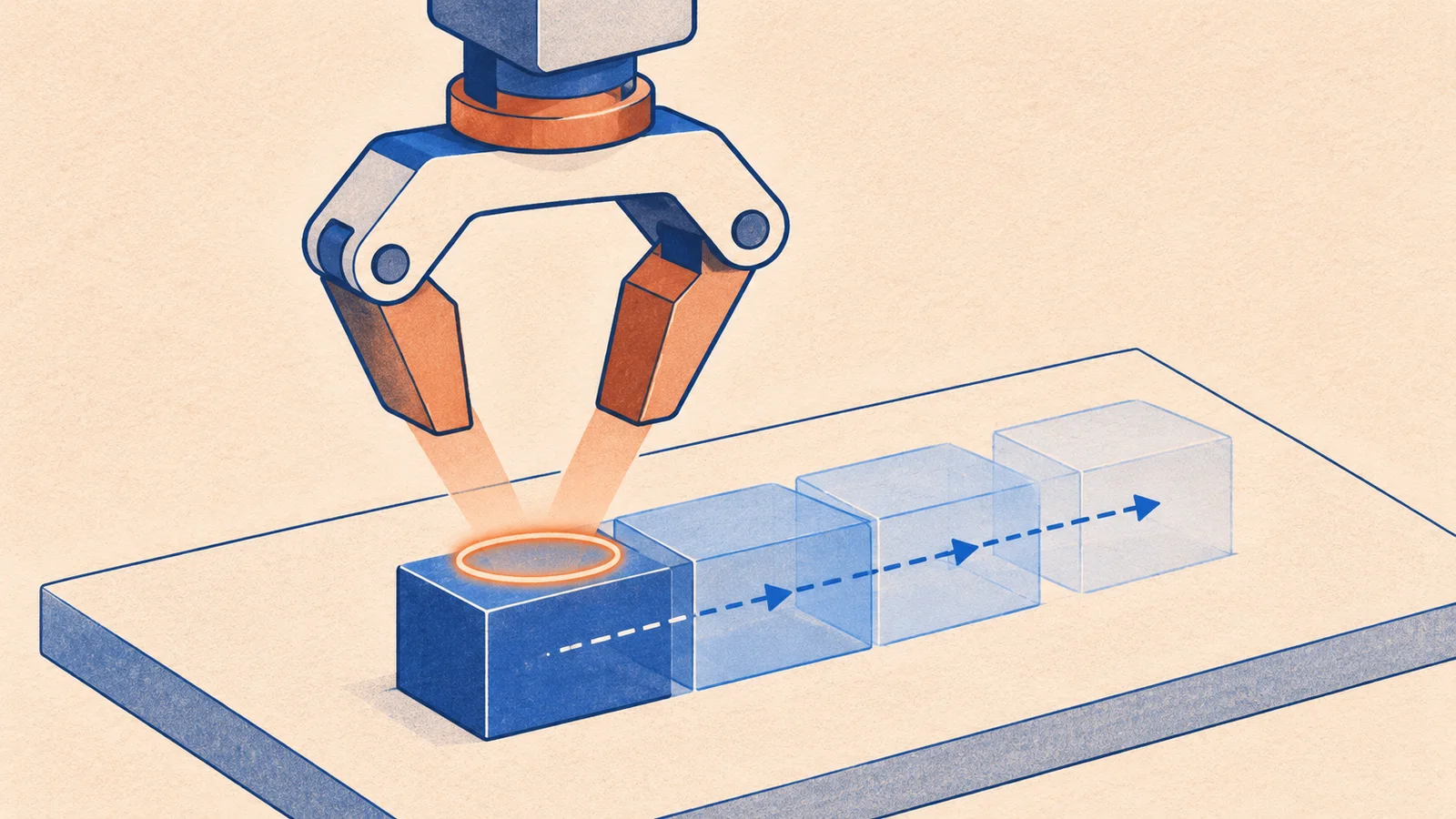
Yuze Zhu and colleagues at the University of California, Berkeley, the University of Toronto, the University of Southern California and MIT introduced HeadLight, a method for fine-tuning robot models, in arXiv 2611.33963v1, a preprint that has not been peer-reviewed. The authors report 62.28% average success on six RoboTwin 2.0 simulation tasks held out from fine-tuning after updating about 1.1% of the parameters in Zero-WAM, a model that predicts future video and robot actions.
In the same RoboTwin 2.0 tests, the authors report 57.89% average success for full fine-tuning and 58.66% for low-rank adaptation (LoRA). HeadLight had 113.3 million trainable parameters. The LoRA baseline had 113.5 million trainable parameters and applied low-rank updates to attention projections in both the video and action parts of Zero-WAM. The preprint reports the authors’ own tests and cites no independent replication of this comparison.
HeadLight fine-tunes 24 video attention heads, which the authors call Next-Interaction Heads, to pinpoint where upcoming grasps and releases should appear in predicted video. It also fine-tunes 48 action heads paired with video Motion Heads, which track movement across frames and stay fixed during fine-tuning. The authors say tuning the paired action heads helps predicted robot actions follow the motion in the video.
Initially identifying Next-Interaction Heads requires labels marking upcoming grasp or release targets. To identify Motion Heads, the researchers compared attention from each frame to the preceding frame with optical flow, an estimate of how image content moves between frames.
The team fine-tuned Zero-WAM on 43 two-arm tasks. Each method used the same evaluation scenes, with 100 trials per held-out task for each of three random seeds.
The authors excluded Open Microwave because the simulator judges success by the door’s hinge angle. They found incidental contact could swing the door far enough to pass that check without a grasp.
The authors list the HeadLight code as forthcoming.
More news
XPeng debuts IRON humanoid and targets a second-quarter 2027 release
DARPA names RoboScout and Disruptors Triage Challenge winners
Si-Ware announces UT Austin study of infrared sensing for humanoid robots