AMD and Embedded LLM report Kimi-K3 throughput within 1% across SSD and DRAM caches
AMD and Embedded LLM tested two 1.8 TB cache pools. The NVMe setup used a 64 GB host-memory write buffer, and the external pool served at most 16% of prompt tokens in the matched Kimi-K3 runs.
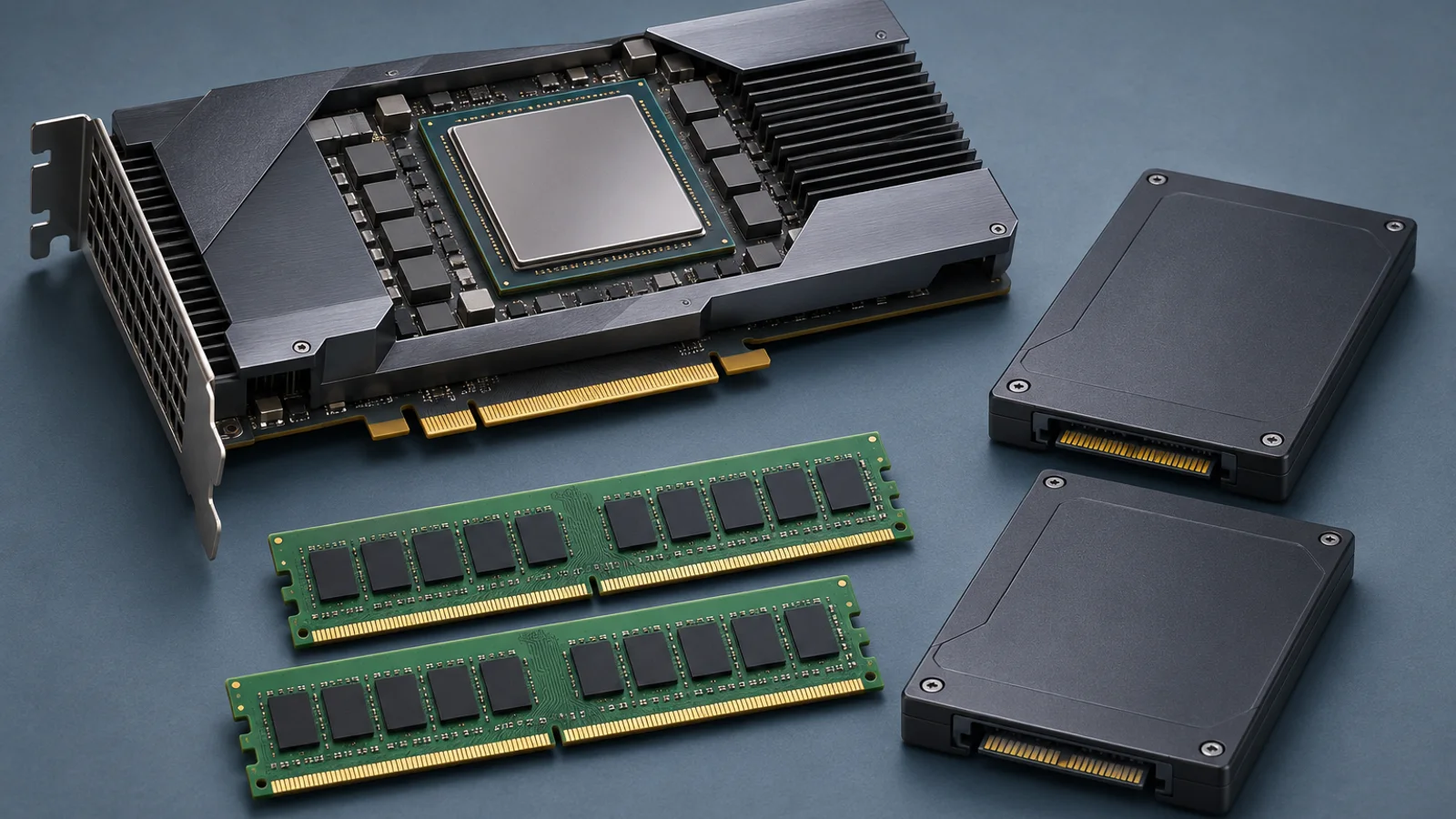
AMD and Embedded LLM reported that Kimi-K3 throughput on vLLM stayed within 1% across two 1.8 TB cache pools, one on NVMe SSDs and the other in host memory (DRAM). They ran back-to-back comparisons at 48, 70 and 96 concurrent AgentX sessions on 16 AMD Instinct MI355X GPUs, then repeated all three loads. No independent replication of the matched tests has been published.
The NVMe setup used a 64 GB host DRAM buffer to write to two SSDs and a separate 16 GiB DRAM buffer to stage reads. The authors said the external pool served at most 16% of prompt tokens in the matched tests and that GPU memory served most prompt tokens at all three loads.
MoRI UMBP managed the pool, which stored intermediate model state so vLLM could reuse it when a later request began with the same text. AgentX replays traces from recorded coding sessions.
The authors measured throughput for one hour after warmup, with eight GPUs processing prompts and eight generating output. Throughput counted input and output tokens per second per GPU, including cached prompt tokens.
In separate AgentX tests with a 4 MiB write buffer, the authors reported NVMe throughput 2.5% and 3.5% above DRAM at 70 concurrent sessions on two machine pairs. At 96 sessions on one pair, they reported throughput 6.7% below DRAM. Each comparison used one run per configuration, and reads still used host memory.
vLLM v0.34.0 includes the standalone UMBPStoreConnector and supports optional background lookups. MoRI v1.2.5 includes SSD batch-read and shared read-staging changes and remains the latest published MoRI release.
MoRI merged BatchTouch support for reporting cache hits, the BatchTouch extension for SSD copies and the fix that lets tier policies apply the tested SSD settings into its main branch after v1.2.5. In the NVMe runs, the authors used 256 MiB segment files, turned off checksum verification and used relaxed write durability.
The benchmark used connector changes to report GPU cache hits to the pool, briefly wait within a scheduling pass for background lookups and restore hybrid-model prompt state at specific boundaries. Those changes are in an open pull request on a vLLM fork. A related upstream fix for restoring hybrid-model prompt state and the ROCm output-generation patch used in the AgentX tests also remain open.
More news

AMD introduces a multi-GPU xDiT workflow for ComfyUI

vLLM team introduces vLLM-GR for generative recommendation

AMD details vLLM 0.29 support in Ray beta on ROCm 10.1.0