vLLM announces day-zero serving support for Inkling 2 Mini
vLLM’s launch instructions specify a dedicated Docker image. Each pass through the model’s shared layers keeps its own attention and convolution state.
vLLM says it added support for serving Thinking Machines Lab’s Inkling 2 Mini on NVIDIA Blackwell, Hopper and DGX Spark the day the lab released the model. The project documented a dedicated Docker image for Mini, vllm/vllm-openai:inkling-2-mini, following earlier vLLM support for Inkling 2 Small.
The project directs operators to nightly builds, either the vllm/vllm-openai:nightly Docker image or a CUDA 13 nightly wheel. The recipe lists v0.35.0 as the minimum version and marks it unreleased. Mini’s integration merged into vLLM’s main branch after the project released v0.34.0, its latest stable version. The v0.34.0 registry lacks Mini’s model entry.
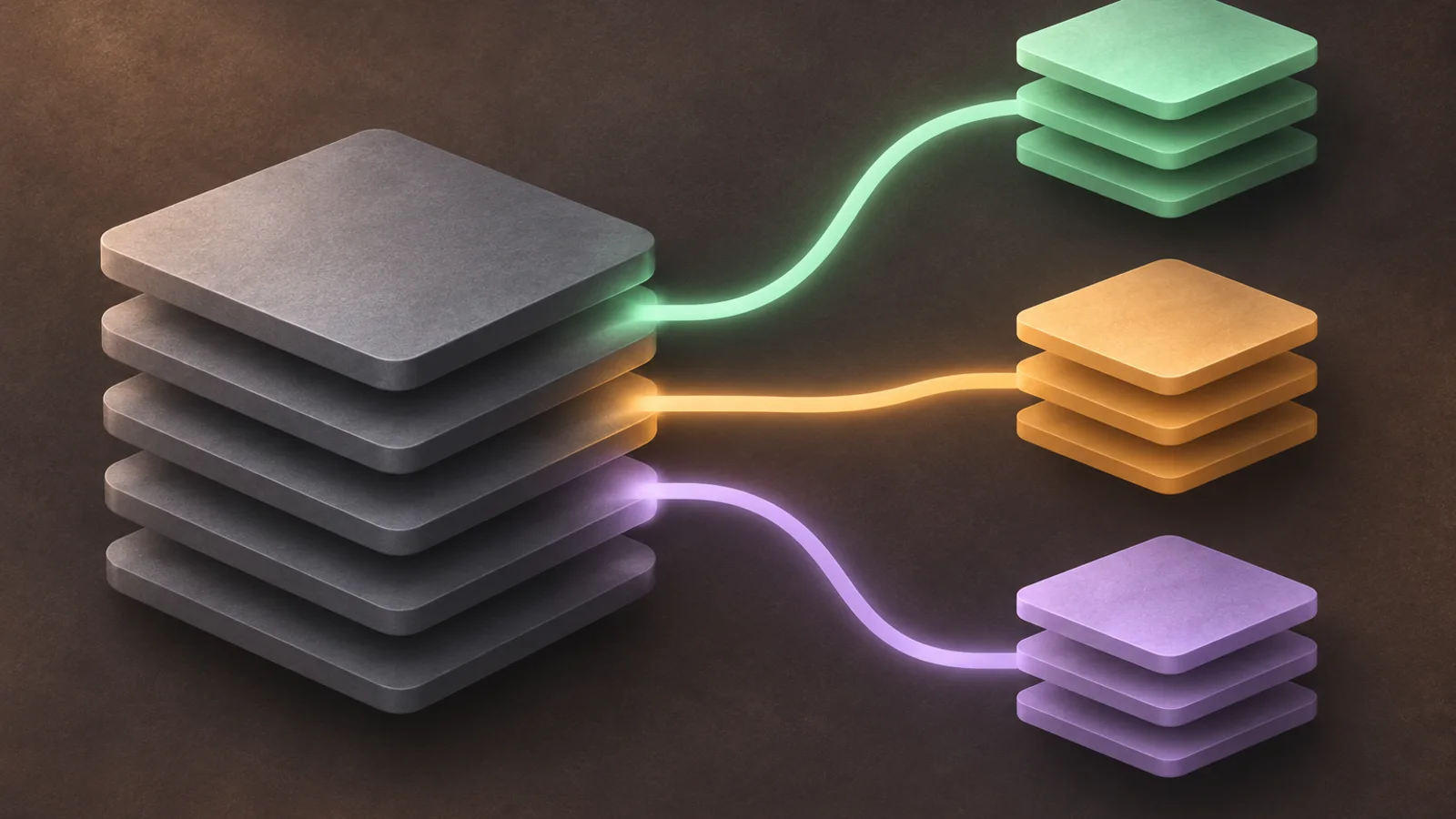
Mini runs the middle 12 of its 24 decoder layers three times per token, using the same weights on every pass. In each shared layer, a pass reads its own key-value (KV) cache, which holds the attention data that pass computed for earlier tokens. Each pass also keeps separate state for the layer’s short convolution.
vLLM says it registers each extra pass through a shared layer as a separate attention layer for cache management. The project counts 48 KV caches and 48 convolution-state caches across the decoder. Its existing prefix caching can reuse state for requests that share opening tokens.
In its serving recipe, vLLM lists a single GB200 configuration for the full 1,048,576-token context with DSpark, which drafts tokens for the model to check, and the reasoning parser enabled. The project’s H100 and DGX Spark configurations cap the context at 262,144 tokens to fit in memory.
More news

AMD introduces a multi-GPU xDiT workflow for ComfyUI

vLLM team introduces vLLM-GR for generative recommendation
AMD details vLLM 0.29 support in Ray beta on ROCm 10.1.0