Nvidia stops licensed H200 shipments to China
Nvidia has stopped sending licensed H200 data-center chips to China, narrowing a recently permitted channel for Hopper-generation AI compute.
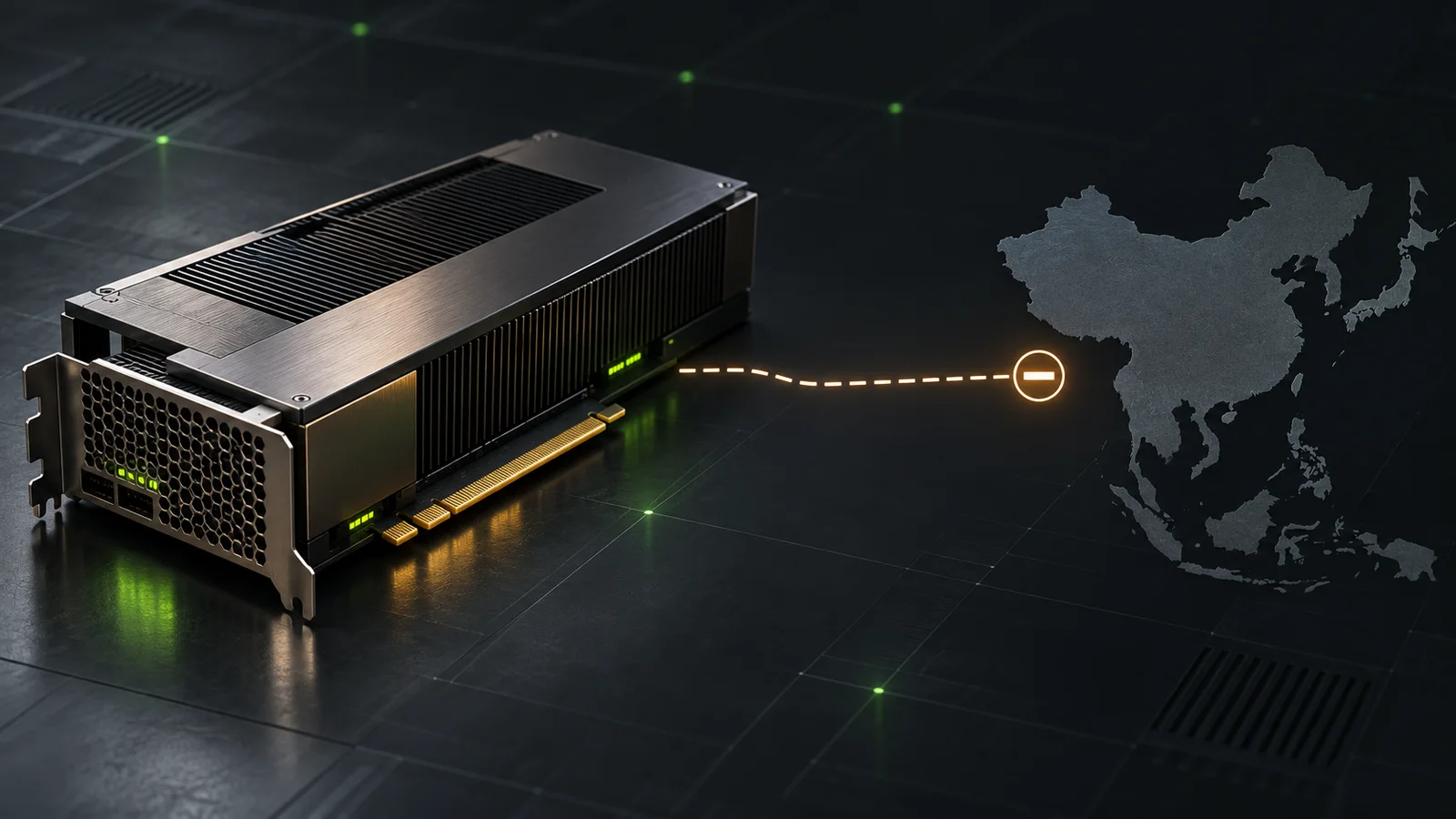
Nvidia has stopped shipping licensed Hopper data-center products to China, interim chief executive Colette Kress said during the company’s fiscal third-quarter earnings call. The affected products include H200 accelerators. The halt narrows current access through a recently active, U.S.-licensed route for Hopper-generation AI compute, but Kress’s statement does not cover every Nvidia product or indirect access through overseas data centers or secondary markets.
As part of its fiscal third-quarter results, Nvidia reported $2.4 billion in shipments of licensed Hopper products to China. Its fiscal fourth-quarter outlook assumes no data-center compute revenue from the country.
Nvidia describes the H200 as a Hopper-architecture data-center GPU with 141 GB of HBM3e memory and 4.8 TB/s of memory bandwidth. The company says its larger, faster memory is intended for generative-AI, large-language-model and high-performance-computing workloads.
The halt follows a January policy change under which the U.S. Bureau of Industry and Security moved H200 export-license applications for approved Chinese customers to case-by-case review, subject to security conditions. Nvidia later disclosed that it had made a fraction of the H200 shipments allowed under U.S. licenses; those shipments represented less than 1% of its fiscal second-quarter Data Center revenue.
The licenses required the chips to be inspected in the United States before delivery to customers, Nvidia said, making the shipments subject to a 25% tariff when imported into the United States for inspection. Kress did not give a reason for stopping shipments, and the available records do not say whether the halt is temporary or permanent, how many units remain unshipped, or which customers are affected.
More news

NVIDIA announces Rubin HPC GPU for science and engineering
AWS makes SGLang-Neuron publicly available for Trainium
AMD makes sixth-generation EPYC server processors generally available