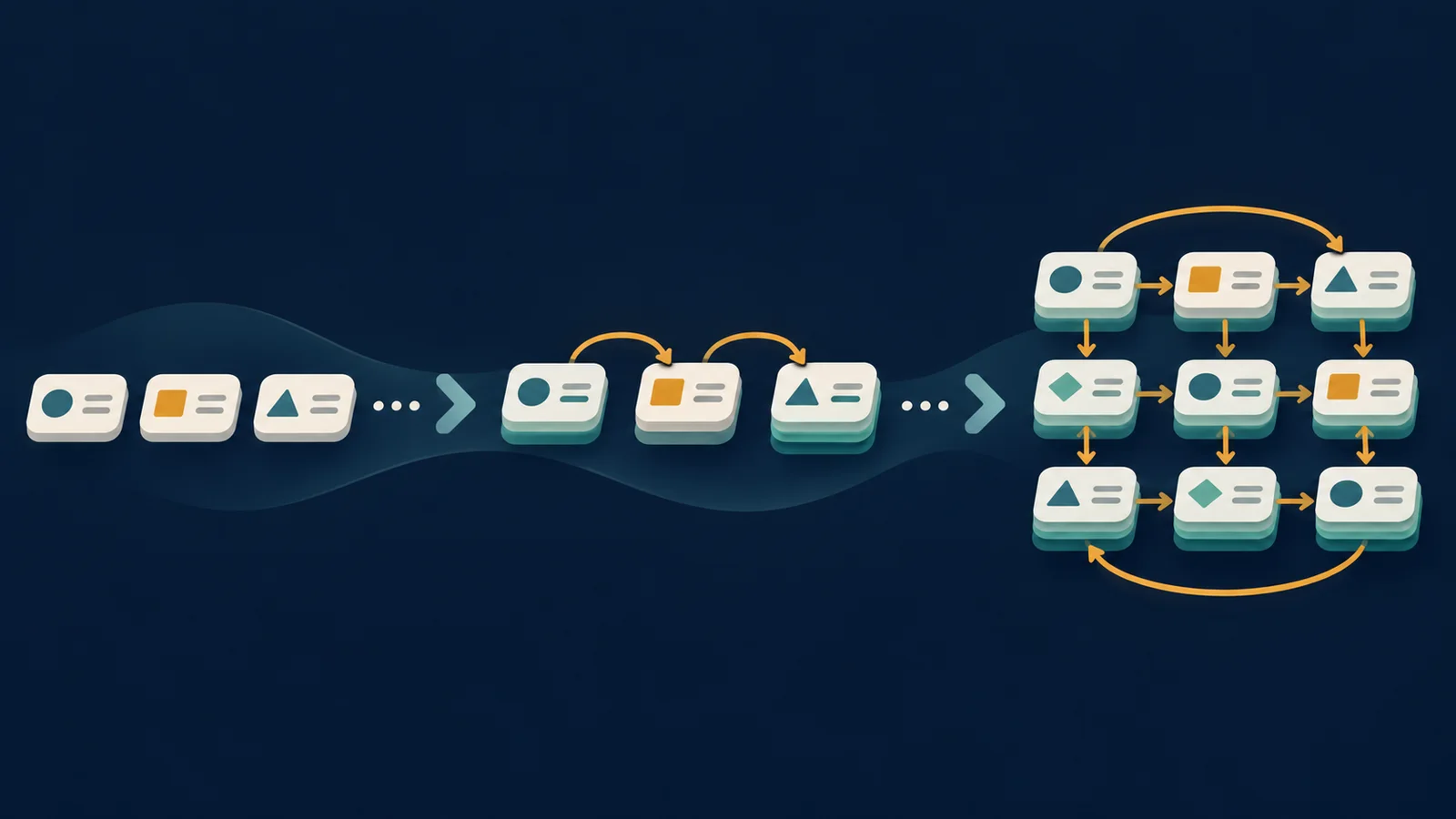
OpenAI says coding agents finish 46% of two-to-four-hour research tasks unaided
OpenAI’s internal analysis estimates that coding agents completed 46% of delegated two-to-four-hour research tasks without human intervention in October, but task selection, methodology changes and missing underlying data limit the result.

OpenAI said its coding agents completed an estimated 46% of delegated research tasks that would take a person two to four hours without human intervention in October 2026, up from 23% in March. These are internal estimates from OpenAI’s research organization, not an independently audited productivity rate.
For tasks estimated at four to eight hours, OpenAI put zero-intervention success at 35% in October, compared with 13% in March. The company said its November analysis uses an updated methodology and cautioned that researchers may have changed which jobs they delegated within each duration bucket. That means the increase could reflect both stronger models and different task selection. OpenAI’s public report did not supply the underlying session-level data needed to reproduce the estimates independently.
The results varied sharply by the kind of work. Across sessions from Aug. 1 through Oct. 18, OpenAI estimated success rates of 69% for communication tasks, 58% for analysis and 43% for building tasks. At a narrower level, it reported 79% success for monitoring runs for issues and 72% for answering technical questions, compared with 35% for launching training runs, 29% for building evaluation, reinforcement-learning and agent environments, and 25% for inference and serving-stack code.
Those categories come from an AI research-and-development taxonomy developed by Epoch AI. Epoch called the six-category, 60-plus-task framework a first attempt based on a literature review and brainstorming, and invited corrections for missing or misdescribed work. It did not validate OpenAI’s success estimates.
OpenAI also valued median daily agent use per researcher at about $2,400 in October and 90th-percentile use at about $23,000, both at API list prices. Those figures rose 62% and 105%, respectively, from September. They are API-equivalent valuations, however, not disclosed cash costs. OpenAI said the trend combines changes in activity, model prices, model behavior and the agent harness. A temporary harness-efficiency change beginning Aug. 21 reduced documented input-token spending until a reversion began Sept. 10.
The company compared September’s API-equivalent agent use with researcher compensation and said the former was about twice non-equity pay. That comparison excluded equity, which OpenAI said represents 70% to 80% of target researcher compensation. Internal Codex, ChatGPT and API use together represented 2% of total research compute, according to the company.
OpenAI’s survey evidence has limits, too. A late-August to early-September survey of 101 research staff used ad-hoc sampling and hypothetical tradeoffs, and the company warned that self-reports may be inaccurate. The median respondent said they would trade 40% of team headcount or, in a separate question, 30% of team compute to retain frontier coding agents for three months. In a separate late-October survey, 27 of 28 respondents chose or leaned toward OpenAI’s latest internal model over help from a mid-career research engineer paired with a 2024 model.
OpenAI cautioned that more lines of code and experiments do not necessarily mean faster research progress. It changed its code metric from quarterly averages to a 28-day trailing average and revised the inclusion rules, including excluding tests. Its capability-output measure combines public and internal benchmarks, and OpenAI said its models perform relatively better on that mixture than on Epoch’s public measure. That limits direct comparisons and does not establish that agent use caused faster model progress.
In interviews, researchers described agents as useful for implementation, debugging, monitoring and large-scale scanning. They also said the tools can show poor research judgment, produce low-quality code or data, take unnecessary detours and rely on invalid analytical assumptions. OpenAI said people originated the named key ideas behind post-training and safety monitoring for GPT-6 Astra and GPT-6.2 Astra.
More news
Vals finds prompt framing shifts AI targeting in simulations
Perplexity releases BrowseSafe++ benchmark for browser-agent prompt injection
CWE-bench v2 opens 100 public security-repair tasks