OpenAI details Codex workflow for ChatGPT performance regressions
OpenAI says its four-part Performance Factory workflow assigns Codex agents to investigate ChatGPT performance regressions, propose fixes for engineer review and verify recovery after deployment.
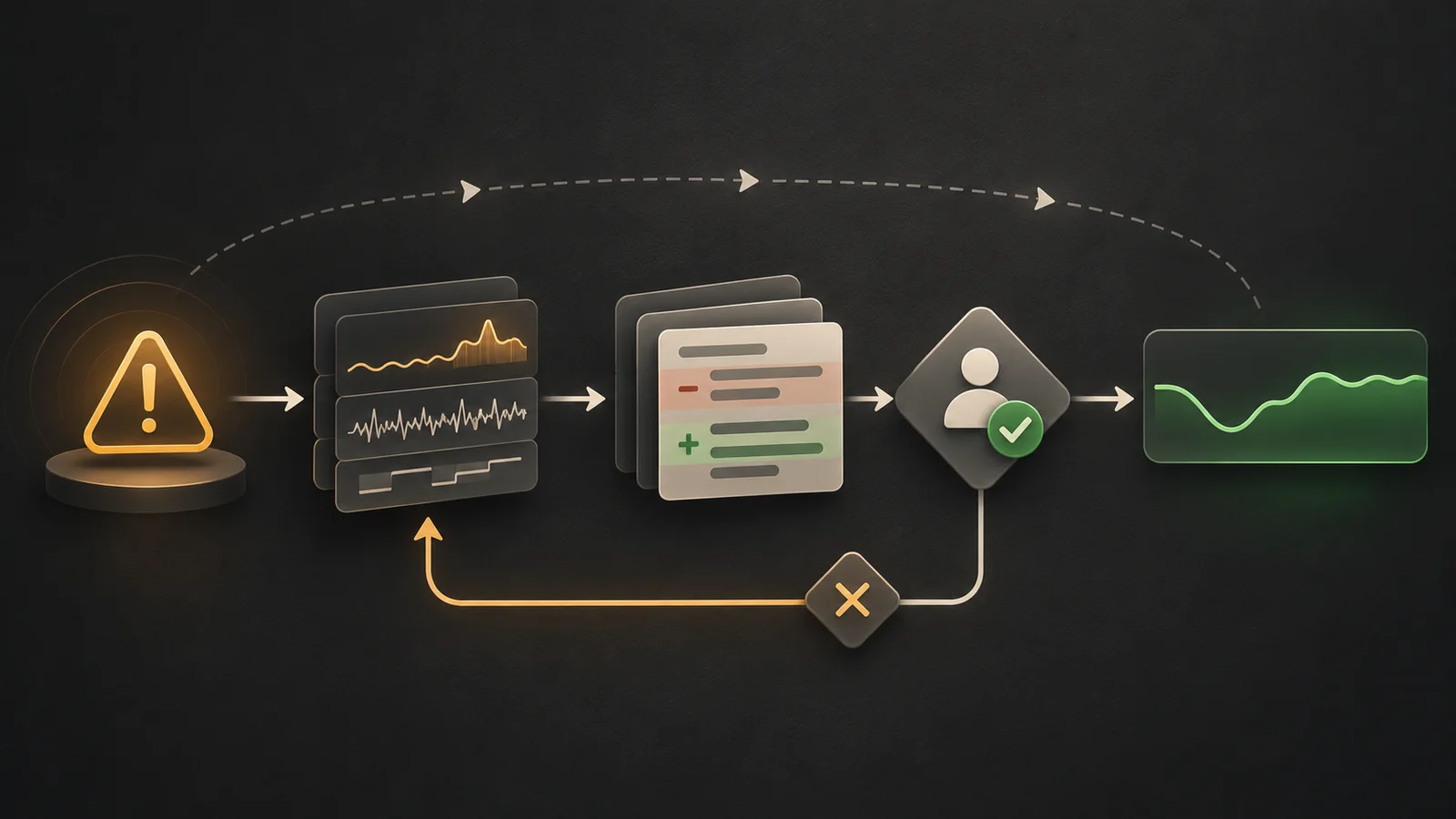
OpenAI has described a cloud workflow that assigns Codex agents to investigate ChatGPT performance regressions, propose code changes for engineer review and check whether performance recovers after deployment. The company calls the internal system Performance Factory. It coordinates recurring agent turns with human decisions, but the available evidence documents OpenAI’s operating design rather than independently verifying its deployment or results.
Four parts make up the design. A task service stores each investigation as a workflow with configured states, permitted transitions and explicit steps requiring an engineer. Markdown prompts tell an agent what to do in each state. A dispatch loop periodically finds tasks ready for more work, starts a Codex turn with the relevant instructions and expects the agent to record progress before advancing the task. An internal API runs those turns in cloud environments on OpenAI’s network, where agents can access code repositories and observability tools such as metrics, logs, traces, CPU profiles and memory snapshots. OpenAI says the agents use a service identity so their permissions can be scoped and their actions attributed.
Event subscriptions form the fourth part. A paused task can wait for a GitHub review comment, a failed continuous-integration check or a deployment event. Once that event arrives, the task becomes ready for the dispatch loop to assign another Codex turn. Status and findings persist in the task service rather than in one agent’s context, so another agent or an engineer can resume the investigation after a handoff.
The regression workflow starts when a configured alert creates a task and an agent analyzes telemetry to propose a root cause. A separate Codex session then challenges the diagnosis by checking assumptions and counterfactual explanations. OpenAI says it added that step after agents sometimes accepted an initially plausible but incorrect cause. If the diagnosis passes review, an agent can implement a proposed change and open a pull request. An engineer still reviews the code and decides whether to merge it.
After deployment, another agent compares performance with the earlier baseline. Full recovery closes the task. Partial recovery closes the original regression and opens a follow-up task; no improvement sends the regression back for investigation. That branching creates the alert-to-recovery loop without giving the agent final authority over a merge.
OpenAI says the Regression Workflow tracked more than 1,700 investigations in just over three months, identified root causes in more than 600 cases and averaged 17 automated investigations a day. The company also says a manual review of 100 root-cause suggestions rated 70% accurate, while the remaining 30% needed refinement or did not fully establish causality. OpenAI did not publish the underlying task records, evaluation sample, scoring rubric or case-level results. The figures therefore remain company-reported rather than independently validated.
OpenAI says reliable fixes remain harder than diagnosis because an agent can propose an unnecessarily complex change or introduce another problem, leaving architectural tradeoffs to engineer judgment. The workflow the company describes currently begins with configured alerts. Proactive detection from performance data and shipping some low-risk fixes without human approval remain exploratory work, not documented production capabilities.
More news
Superhuman expands Go across Docs and Mail as assistant rollout begins
Pydantic AI adds Azure Durable Task recovery for agent runs
Meta puts AI agents to work across ads-model rollouts