TwelveLabs Releases Pegasus 1.6 With Egocentric Video Support
TwelveLabs released Pegasus 1.6 with first-person video support and structured, timestamped outputs for robotics-data workflows, but no independent evidence yet shows that its annotations improve robot training.
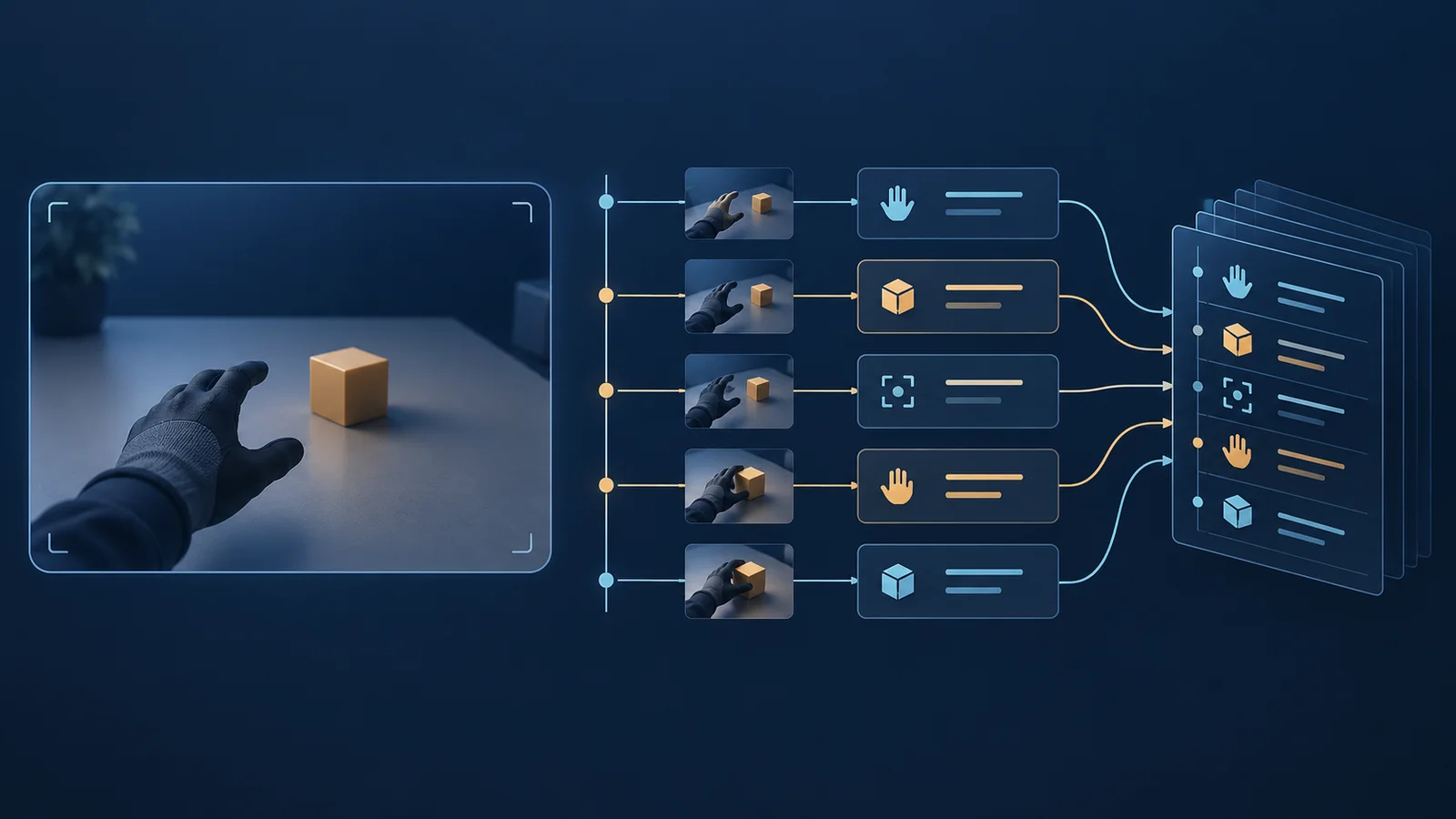
TwelveLabs released Pegasus 1.6 with support for egocentric video, adding tools that turn first-person footage into descriptions and structured, timestamped metadata. The company says those outputs can support robotics and embodied-AI data preparation, but the reviewed evidence does not show that the generated annotations improve robot-training accuracy, task completion or data efficiency.
The model can analyze footage from sources such as wearable cameras and teleoperated systems. In TwelveLabs’ documented segmentation workflow, developers define the kinds of segments they want and can specify custom metadata fields. The service then returns structured records with time boundaries; Pegasus 1.6 can also provide timestamped events within a segment. TwelveLabs says those records can supply action labels or quality-control metadata for robotics data pipelines, while robotics teams still have to connect the outputs with motion, sensor and control systems.
The release also adds native image analysis. Pegasus 1.6 accepts between one and 20 images in an analysis request through the same model family and prompts used for video. TwelveLabs also says the model identifies and names people, objects and characters more consistently than Pegasus 1.5, but the sources reviewed for this story contain no independent accuracy benchmark for that comparison.
Structured video segmentation itself is not new to this version; Pegasus 1.5 already supported timestamped segmentation. The 1.6 update adds specialization for first-person material and changes how some time-based metadata can be extracted, including information that is less dependent on preset segment definitions.
For existing customers, the migration guide says ordinary analysis calls can move to Pegasus 1.6 by updating the SDK and changing the model name. Batch analysis does not support Pegasus 1.6, so workloads using that feature must remain on Pegasus 1.5.
More news
IBM brings native Qiskit development to Fortran, C++ and Julia

OpenAI releases 722 math manuscripts at varied verification stages

OpenAI and Ironclad turn contract work into agent training tasks