UK links strategic data-centre support to jobs and local investment
Britain's Data Centre Covenant offers qualifying strategic projects power and planning help if they meet local, environmental and security commitments.
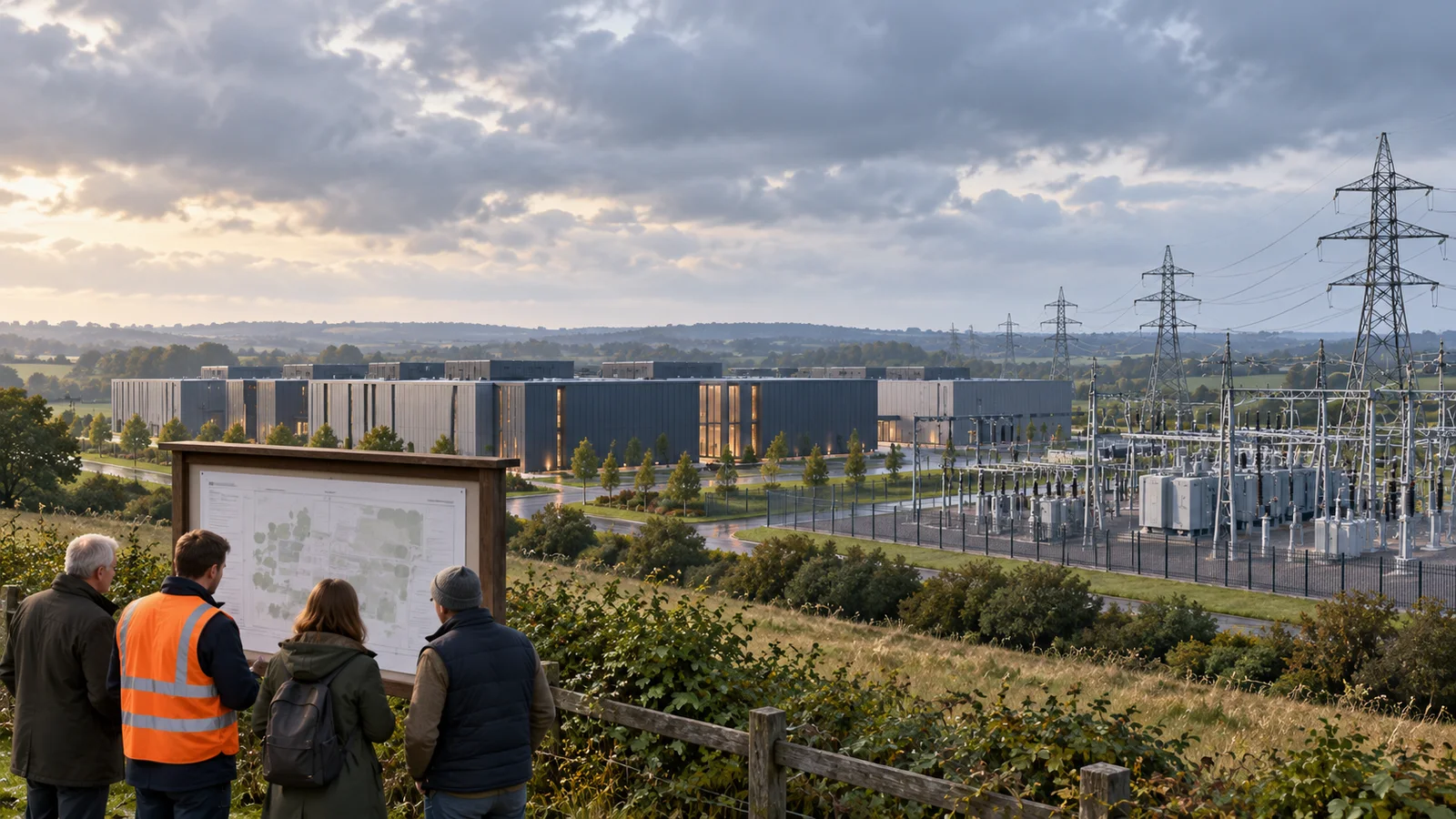
The UK government has published a Data Centre Covenant offering qualifying strategic data centres help securing power and accelerating planning in return for commitments on local investment, jobs, environmental performance, supply chains and security.
Projects judged sufficiently strategic could gain earlier access to grid capacity, but the policy does not create an automatic entitlement. The government has not yet defined a strategic data centre or published all of the additional criteria projects will have to meet.
All data centres are encouraged to meet the covenant’s tests. Strategic projects must do so to qualify for additional government action. A new Ministerial Control Centre, chaired by the Minister for AI with support from Treasury and energy ministers, will consider support and seek to accelerate power and planning for the most strategic sites.
For sites that demonstrate sufficient strategic value, the government says it may reserve future grid capacity, reallocate capacity released when other projects leave the connections queue, identify locations with capacity available before 2030, and facilitate transfers of pre-2030 data-centre connection contracts. It also plans a tightly controlled framework for temporary on-site generation. That option would be limited to exceptionally strategic projects when other measures cannot provide capacity in time, with conditions including energy security.
The grid bottleneck is already affecting project decisions, including Microsoft’s withdrawal from the Nscale Loughton data-centre deal after a grid delay.
In return for potential government support, strategic developers should agree a Local Benefit Plan with the host community and commit substantial investment linked to the project’s size. The covenant cites transport, parks and town centres as examples of local priorities, but sets no project-level amount or formula.
Other tests call for jobs that last beyond construction, paid apprenticeships and training, support for UK suppliers and technologies, and a meaningful contribution from the most strategic projects to developing and deploying British AI hardware. Security commitments include resilient UK access to computing capacity for critical services and national priorities, cooperation with national technical authorities, information-sharing and disruption planning.
Environmental requirements include protecting nature, minimising water use, publishing annual energy and water data, and reusing waste heat where practical. New facilities should be designed for a power usage effectiveness ratio of 1.3 or better, meaning no more than 0.3 units of overhead energy for each unit used by computing equipment.
The government estimates that 6 gigawatts of AI data-centre capacity will be needed by 2030 to support its national-interest and domestic-compute objectives. Budget 2026 describes the covenant as tests for approving new strategic data centres, matched by stronger energy-connectivity support for projects that contribute most to UK objectives.
The definition of a strategic data centre and additional eligibility criteria will follow, the government says. The covenant also leaves open how much grid capacity may be reserved, reallocated or transferred, along with the permitting, emissions, duration and enforcement rules for temporary generation.
More news

US Energy Secretary orders PJM to shift data centers onto backup diesel as grid nears record peak
 Dmytro Spodarets·Jul 5, 2026

Oracle and Google to bring TPUs to OCI in 2027

Spain eases energy rules in revised data-center proposal