Vinci raises $250 million for AI-native engineering simulation
Vinci announced a $250 million Series B at a $1.5 billion valuation to expand an AI-native platform for simulating physical behavior during hardware design.
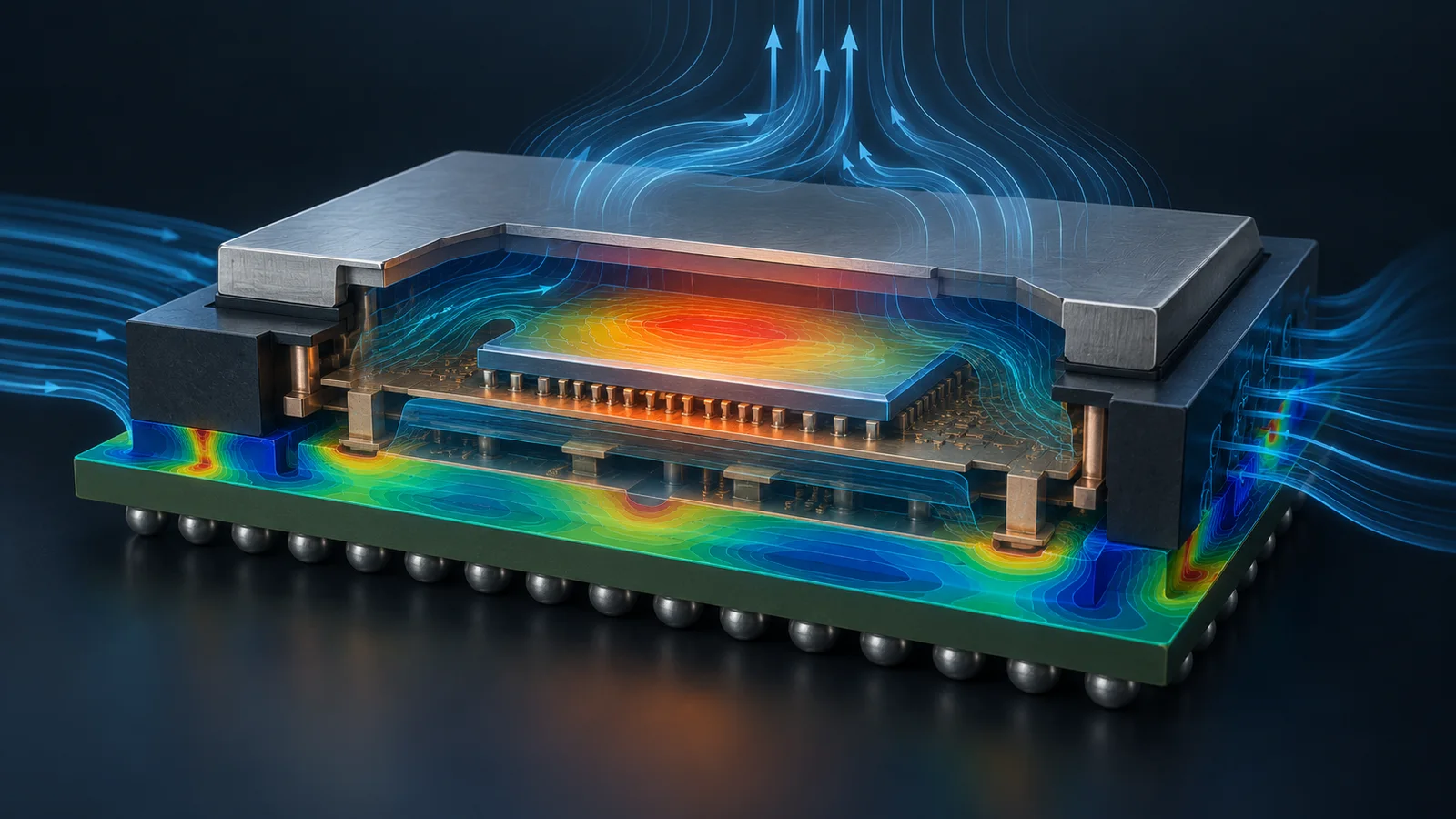
Vinci announced a $250 million Series B at a $1.5 billion valuation. Advent International, Temasek and Xora co-led the financing.
Vinci said it will use the capital to expand its engineering-simulation platform beyond semiconductors into more physical phenomena, engineering disciplines and hardware sectors, including vehicles, aircraft and satellites. It also plans to invest in personnel, computing infrastructure, product development, agentic engineering workflows and integrations with customers’ systems.
Physics simulation lets engineers test how heat, fluids and mechanical forces may affect a design before manufacturing it. Vinci describes its platform as an AI-native computational system that brings those calculations into the design process instead of reserving them for a later validation step.
Vinci calls its approach Continuous Physics Reasoning. The company said the system combines automated design preparation, software agents that coordinate simulation tasks, a Foundation Model for Physics and GPU-native physics kernels. It said it has commercialized thermal, thermo-mechanical and convective-fluid simulation capabilities, beginning with semiconductors.
Vinci claims the platform can process designs ranging from hundreds of millions to more than 15 billion degrees of freedom in minutes instead of hours or days. In simulation, degrees of freedom are the individual variables a solver must calculate across a model. The company also claims its results are deterministic and solver-accurate at manufacturing resolution without customer-specific training or fine-tuning. The research reviewed for this article found no independent benchmark validating those speed, scale or accuracy claims.
AMD Ventures, Madrona, Eclipse and Khosla Ventures also participated, according to the announcement. Vinci did not disclose revenue, ownership dilution, prior funding totals or a detailed allocation of the new capital. The company also did not identify customers or production programs in the opened sources.
More news
Flow Engineering raises $50 million for AI hardware engineering platform

Ema raises $77 million Series B for enterprise AI workers

Verda raises $189 million Series B to expand its European AI cloud