Cursor launches Composer 2: a model more capable, cheaper and faster than its predecessor
Cursor recently released Composer 2, a new in-house coding model that vastly improves its predecessor's performance. While Composer 2's benchmark scores may not be outstanding, Cursor is betting that the model's lower price point and native integration to the coding environment will drive adoption.
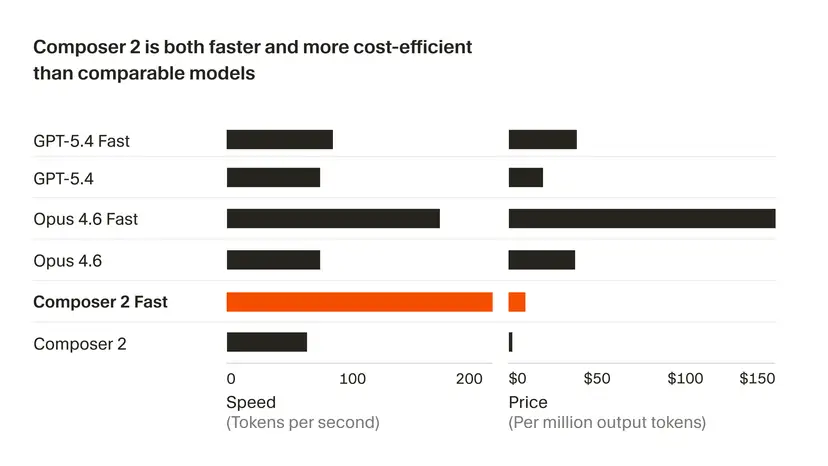
Cursor, the AI coding platform valued at $29.3 billion, has released Composer 2, a new in-house coding model that dramatically improves on its predecessor while slashing costs by up to 86%.
Built as a fine-tuned variant of China's open-source Kimi K2.5 model, Composer 2 is available exclusively within Cursor's coding environment at $0.50/$2.50 per million input/output tokens—down from Composer 1.5's $3.50/$17.50 pricing. A faster variant, Composer 2 Fast, costs $1.50/$7.50 and is now the default experience.
The model shows substantial benchmark improvements, scoring 61.3 on CursorBench and 73.7 on SWE-bench Multilingual, compared to Composer 1.5's 44.2 and 65.9 respectively. On Terminal-Bench 2.0, Composer 2 scores 61.7—beating Claude Opus 4.6's 58.0 but trailing GPT-5.4's leading 75.1.
Cursor emphasizes that Composer 2 is optimized for "long-horizon agentic coding"—complex workflows requiring hundreds of actions across multiple files, terminal commands, and debugging cycles. The model features a 200,000-token context window and tight integration with Cursor's tool stack.
However, the release comes as Cursor faces growing competitive pressure from first-party coding products like Claude Code and OpenAI's Codex. Social media chatter suggests some power users are migrating to these direct alternatives, questioning whether Cursor's platform adds sufficient value between developers and model makers.
Ellie Ramirez-Camara is the News Editor at Data Phoenix, where she writes the daily AI newsdesk — covering model releases, research, funding rounds, and policy across the AI and machine-learning industry. She tracks announcements from labs and startups alike and distills them into clear, source-linked reporting for practitioners.
More news

Study: Some personal AI agents steer wealthier personas toward pricier options
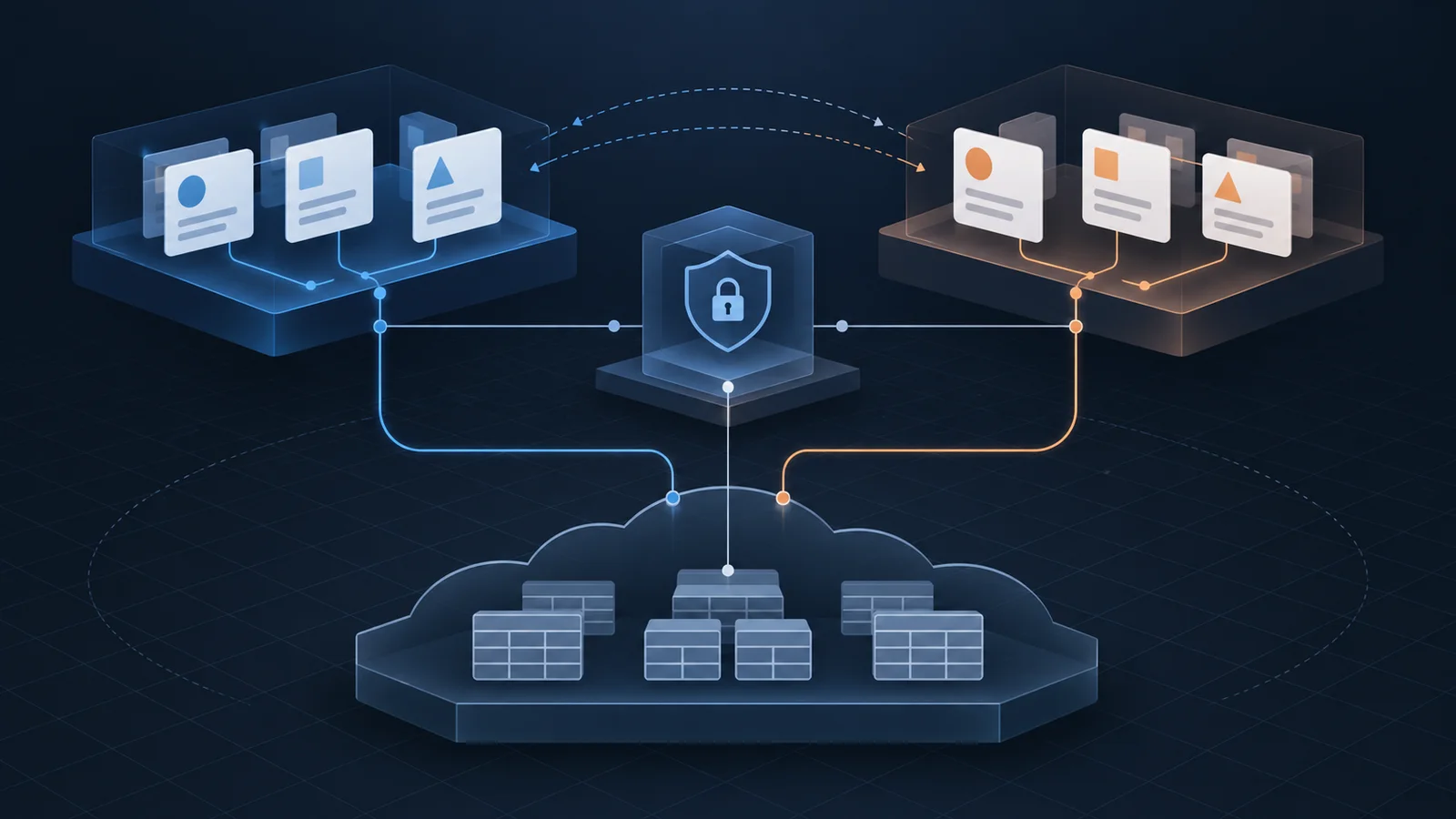
Databricks adds Workday Data Connect federation to Unity Catalog

Google Cloud introduces a universal Gemini agent for enterprise work