IBM and AMD release Pelagos for quantum decoder testing
IBM and AMD released Pelagos, an open-source GPU framework for testing quantum error-correction decoders at scale, with multi-GPU results attributed to the project.

IBM and AMD released Pelagos, an open-source, GPU-accelerated framework for evaluating quantum error-correction decoders at scale. It gives researchers a public tool for testing how reliably decoders correct simulated errors across large evaluation campaigns.
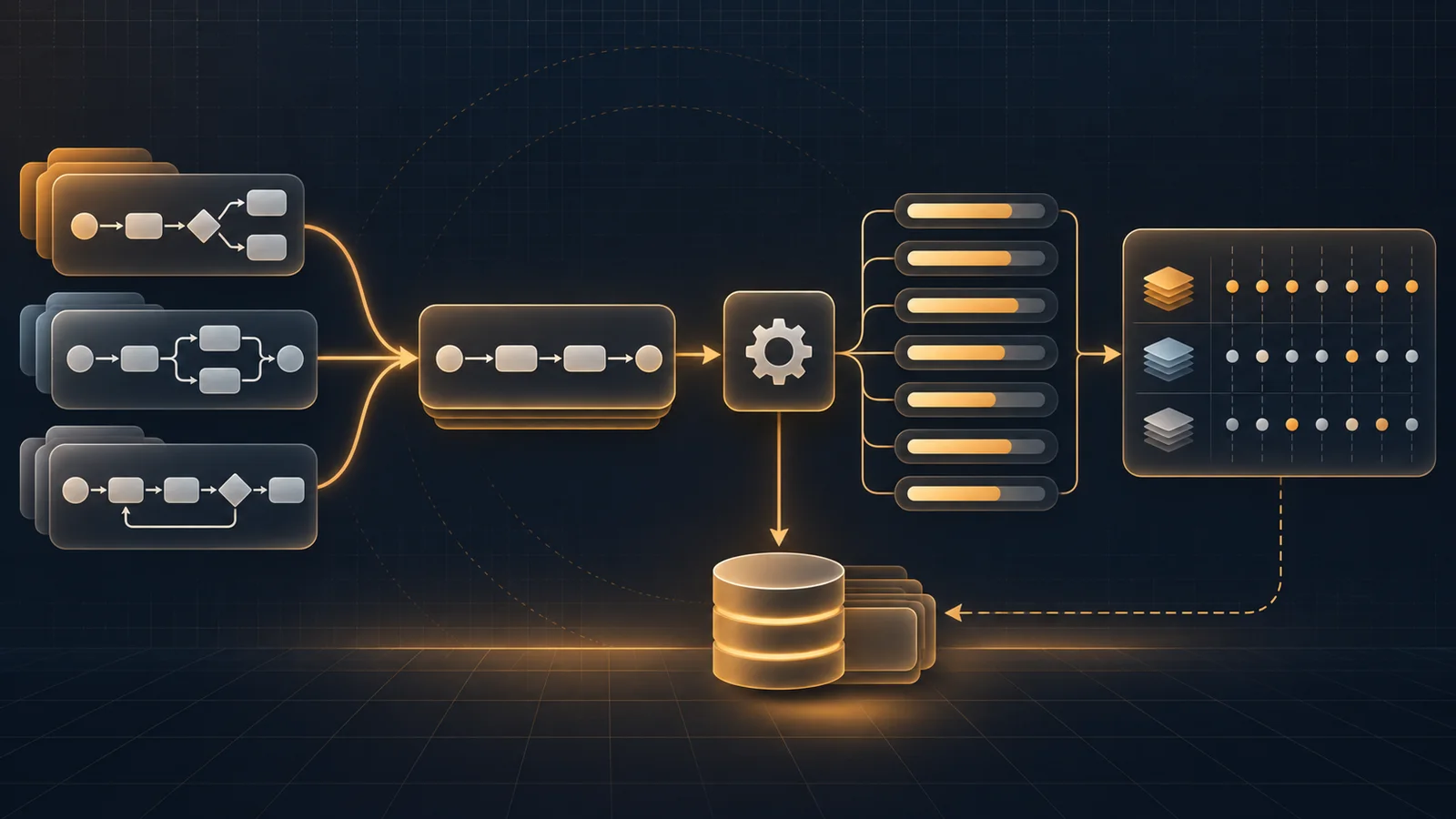
Quantum error correction repeatedly checks a system for signs of errors, producing data called syndromes. A classical decoder interprets those syndromes to select a correction. Pelagos processes batches of independent syndromes in parallel and implements the Relay-BP decoder as GPU kernels written with the Triton programming framework. IBM says the design supports both AMD and NVIDIA GPU environments.
IBM and AMD said earlier Pelagos tests delivered up to 97 times the throughput of a single CPU core. The result is a project-reported benchmark and has not been independently reproduced in the sources reviewed for this story.
A companion multi-GPU paper reports that, at a relay depth of 50 and 1,024 syndromes per GPU, optimized eight-GPU end-to-end speedups ranged from 5.68 to 6.92 times on AMD Instinct MI300X systems and from 6.23 to 7.01 times on MI355X systems across two tested circuits. For the larger circuit, the authors report speedups of 7.58 times on eight MI300X GPUs and 7.45 times on eight MI355X GPUs when counting only GPU decoding time. That narrower measure excludes coordinator preprocessing, dispatch and subsequent result handling.
AMD cautions that the results measure aggregate simulation throughput, not the per-syndrome response time required to operate with live quantum hardware. The researchers also deployed and evaluated Pelagos on Lux, Oak Ridge National Laboratory’s MI355X-based supercomputer.
The public Pelagos repository is licensed under Apache 2.0 and maintained by contributors from IBM and AMD. Pelagos currently requires a GPU, has no CPU fallback and limits multi-GPU operation to one node. Its multi-GPU path does not support scaling across nodes.
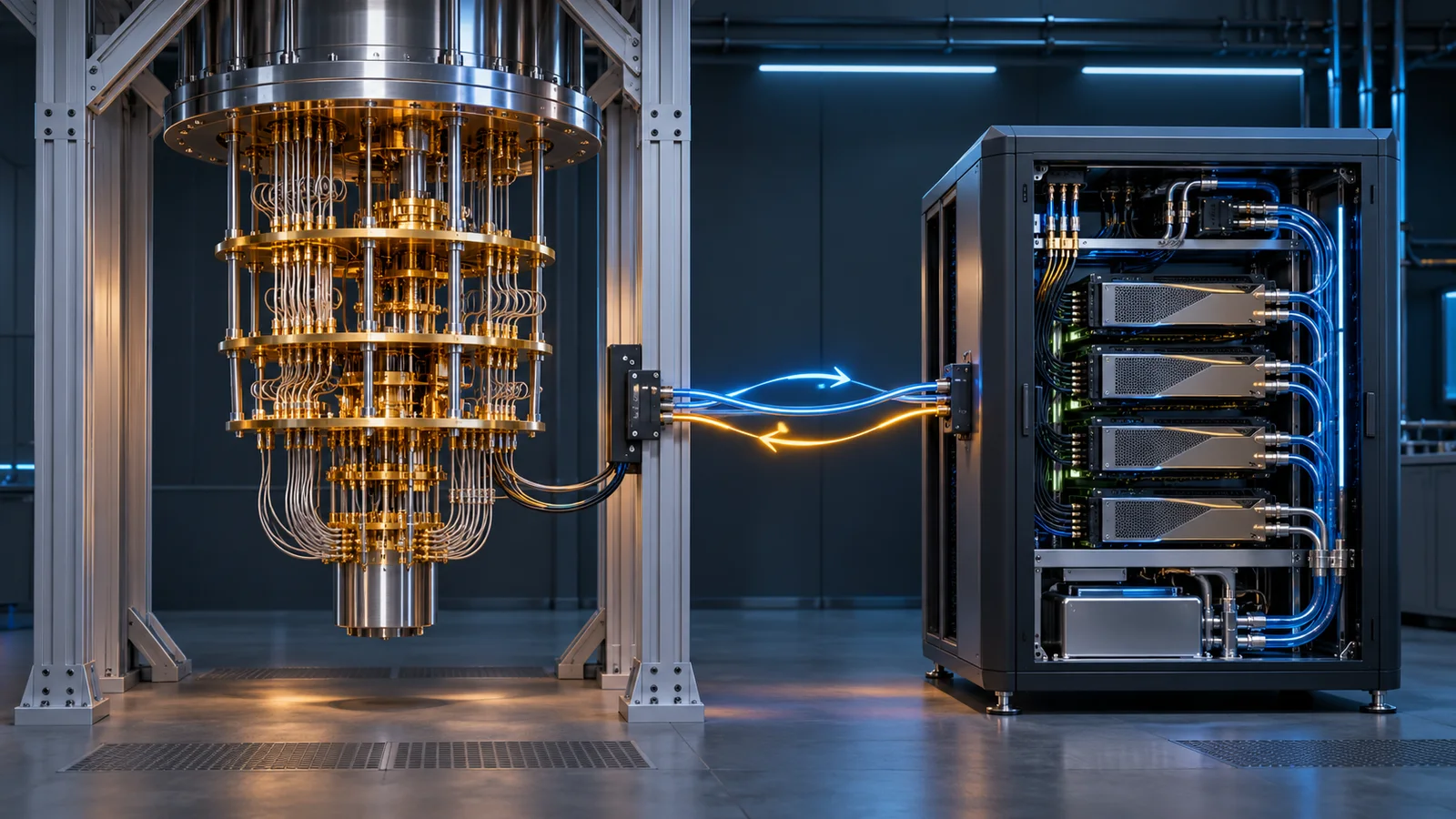
Pelagos complements the separate ORNL, IBM and AMD co-design platform announced earlier in November. Pelagos evaluates decoders with simulated workloads, while the co-design platform colocates IBM quantum processors with ORNL’s AMD-powered Umbra system for low-latency quantum-classical research.
More news
ORNL, IBM and AMD launch quantum error-correction research platform

IBM and NASA release open-source lunar foundation model
NVIDIA, IBM and Fermilab plan modular quantum-classical platform