NVIDIA, IBM and Fermilab plan modular quantum-classical platform
NVIDIA, IBM and Fermilab plan a modular quantum-classical codesign platform for error-correction research and physics applications, but have not disclosed a launch date.
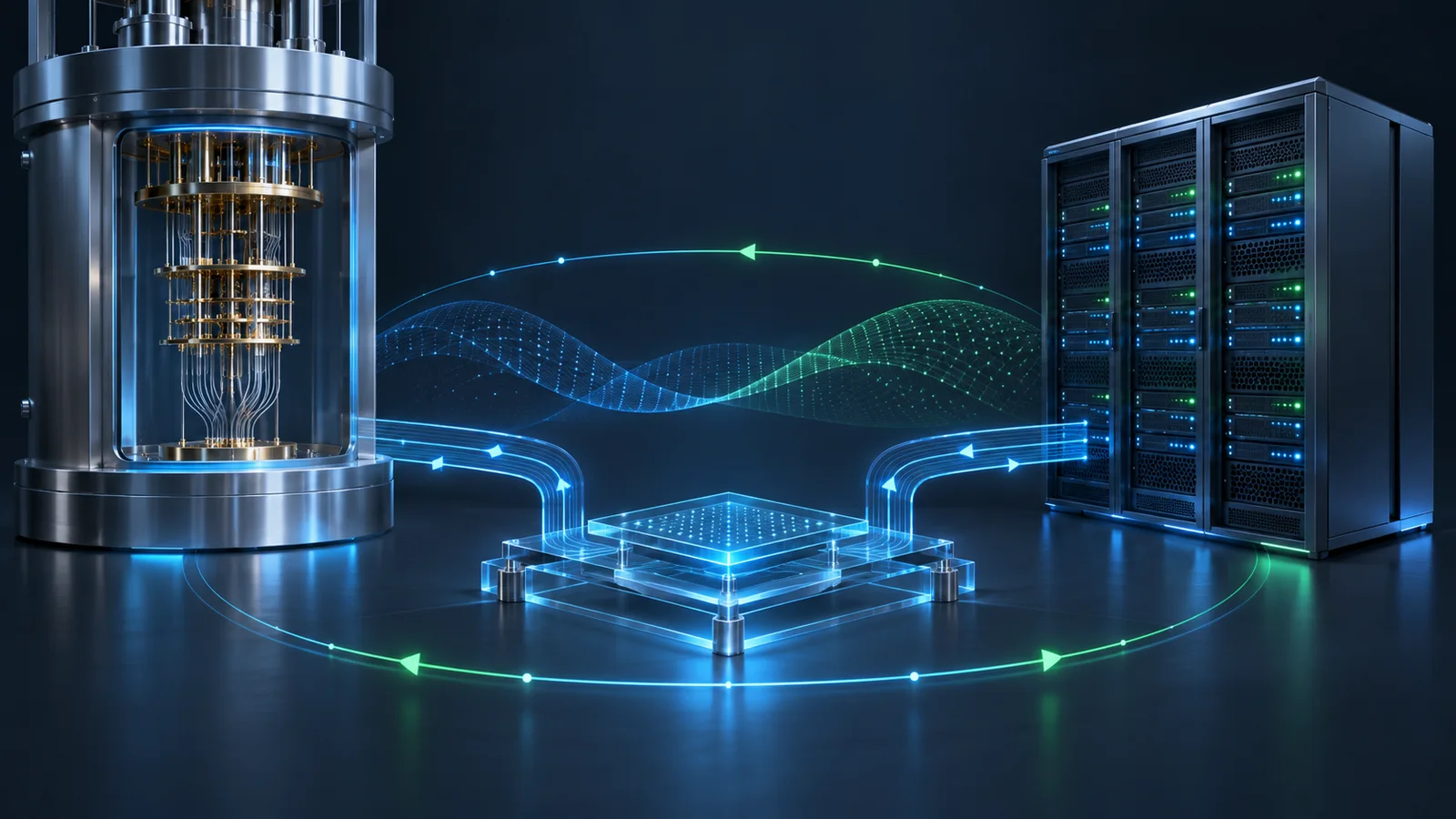
NVIDIA, IBM and Fermi National Accelerator Laboratory announced plans to collaborate on a modular quantum-classical codesign platform for error-correction research, scientific applications and supercomputing integration. The partners describe the system as proposed or planned, not as a completed launch.
The initial configuration would put NVIDIA DGX B200 accelerated-computing systems alongside IBM quantum computers, including systems powered by IBM Quantum Nighthawk. IBM says the work is intended to explore how quantum processors and classical computing can scale together in modular architectures. Fermilab would direct the research toward high-energy and nuclear physics problems, including particle interactions, neutrino physics and nuclear simulations.
Quantum error correction spreads information across multiple physical qubits and repeatedly checks them for signs of failure. Classical decoding software interprets those checks to identify likely errors. That makes close coordination between quantum hardware and conventional accelerators part of the planned research. The platform would let researchers develop and evaluate error-correction codes, decoding algorithms and quantum-classical applications.
Each partner has a distinct role. IBM would contribute quantum processors, software and networking expertise; NVIDIA would supply accelerated computing for decoding, simulation, optimization and real-time feedback; and Fermilab would lead scientific engagement and contribute research from its Superconducting Quantum Materials and Systems Center.
Fermilab says researchers would first model communication between quantum modules and study link errors, latency and feedback. In a later phase, the laboratory’s SQMS Center intends to add ultracoherent superconducting cavity hardware.
Two software projects mentioned alongside the collaboration are separate from the proposed platform. IBM describes the Quantum Resource Management Interface as open-source middleware that lets the Slurm scheduler manage a quantum processor as a computing resource. Its Slurm plugin can already request quantum hardware in a job script.
NVIDIA separately released its TCBP-JOBS decoder through CUDA-Q QEC 0.9.0. The company claims the decoder can accelerate parts of error-correction research by as much as 13,000 times and reduce one computation from 12 weeks to 45 minutes. The supplied sources do not independently validate that benchmark.
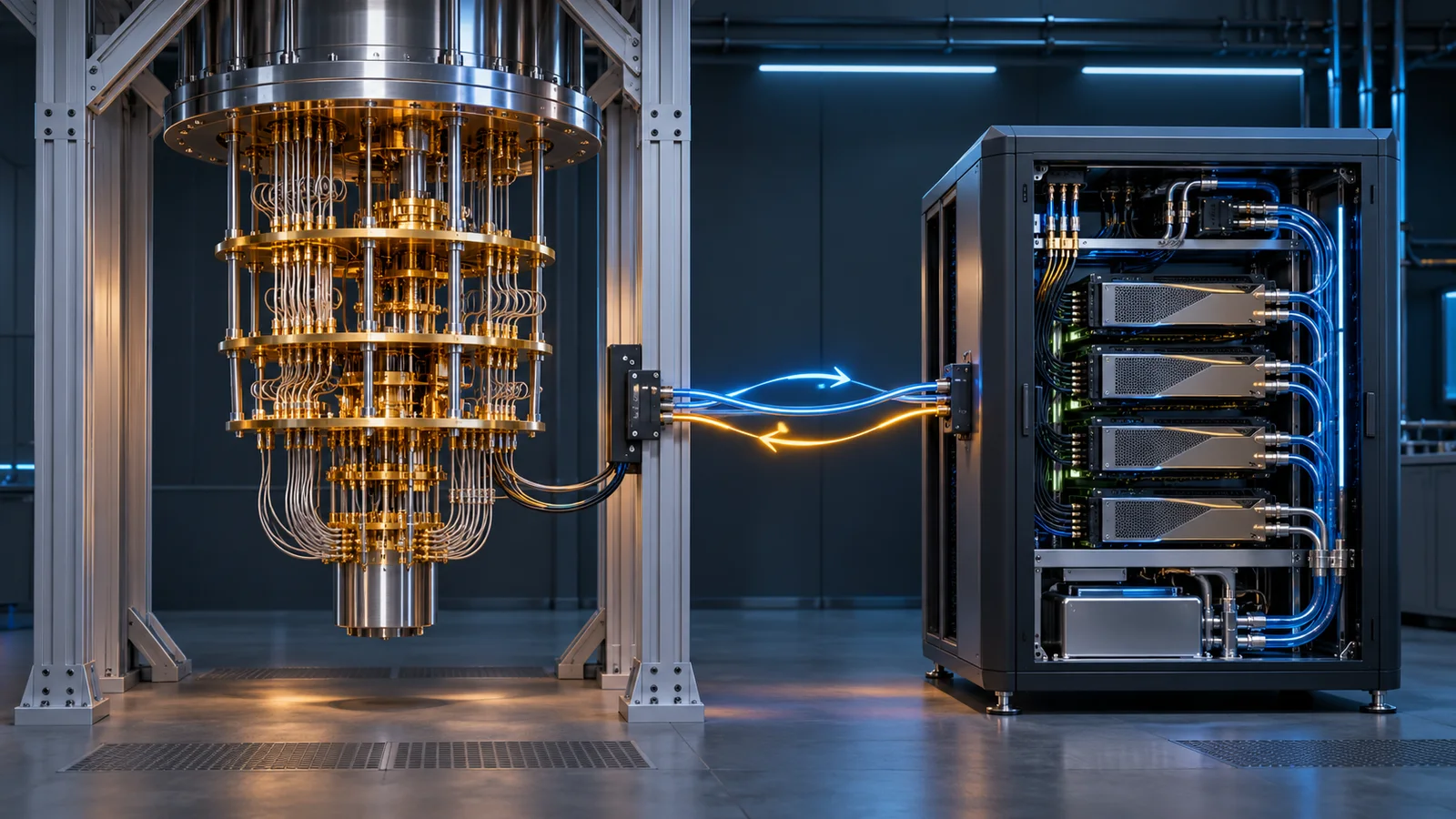
The planned Fermilab effort is also distinct from the already launched ORNL–IBM–AMD quantum error-correction platform. IBM announced that system on November 5, saying it pairs IBM quantum computers with Oak Ridge National Laboratory’s AMD-powered Umbra high-performance computing system.
The NVIDIA, IBM and Fermilab announcements do not provide a launch date, construction schedule, budget, binding delivery milestones or the location of the proposed initial system. They also do not specify when physical links between multiple quantum processors or SQMS cavity hardware would be installed.
More news
ORNL, IBM and AMD launch quantum error-correction research platform

IBM and Lockheed Martin establish Swiss quantum hub at ETH Zurich
IBM says joint team reached 2026 Gordon Bell Prize finals