OpenAI analyzes how 1,819 scientists used ChatGPT
OpenAI analyzed 580,186 scientific messages from 1,819 accounts in its academic-researcher pilot. A separate opt-in survey asked participants to estimate productivity and discovery timelines.
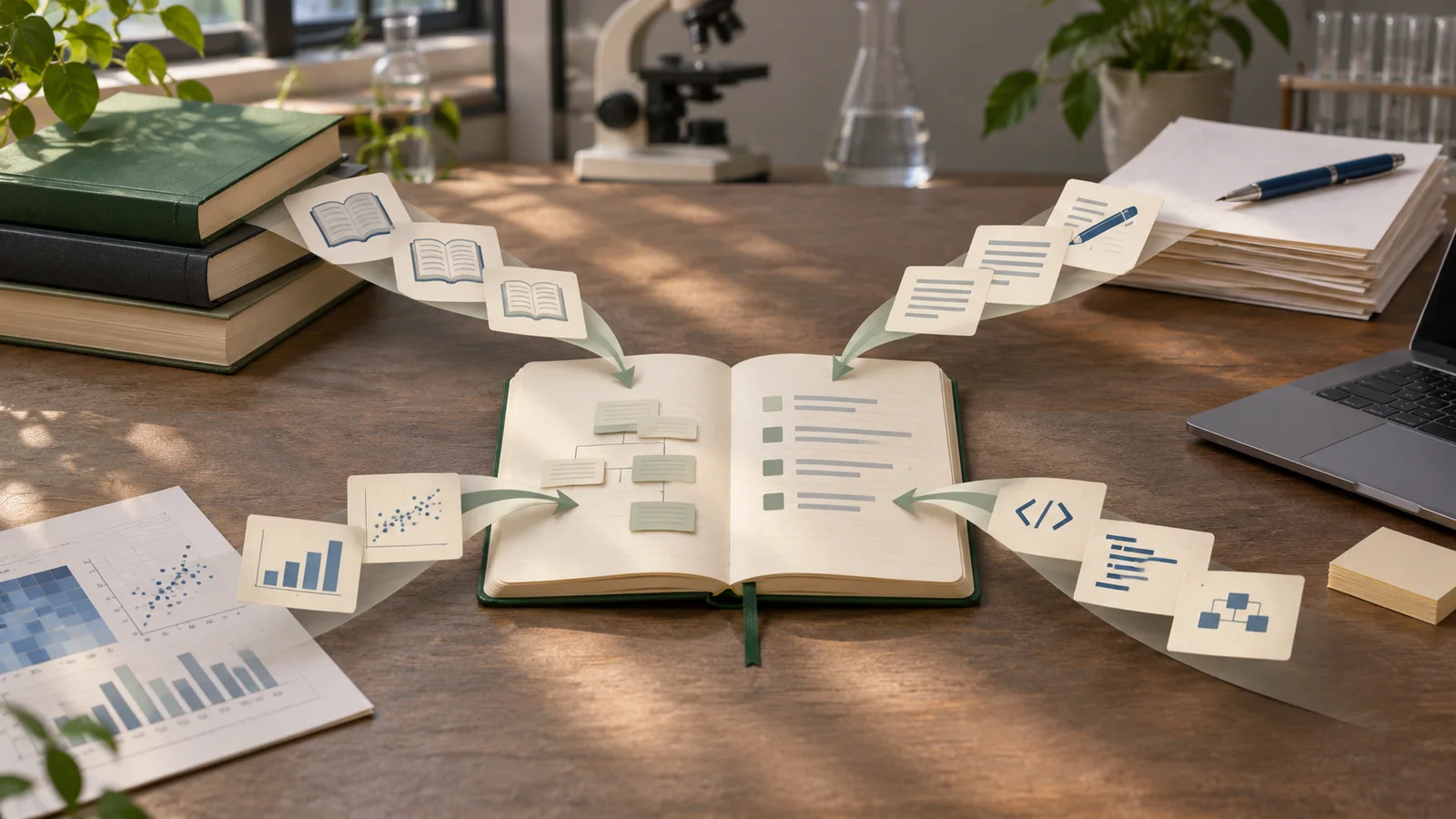
OpenAI analyzed 580,186 messages classified as scientific from 1,819 accounts in its academic-researcher pilot. The classifier-derived results put reading and writing at the top of the selected cohort’s uses of ChatGPT, while a separate opt-in survey asked participants to estimate productivity and the pace of scientific discovery.
The usage analysis covered messages sent from August 20 through September 22, 2026. According to the accompanying paper, classifiers assigned scientific messages to 10 workflows and 40 tasks. Reading and knowledge acquisition accounted for 27.7% of the average participant’s scientific messages, followed by writing and communication at 26.9%, scientific analysis at 16.7%, and research software and code development at 13.8%. Together, those four workflows represented 85% of the average participant’s scientific messages.
The researchers calculated each participant’s distribution across workflows and then averaged those distributions, giving each person equal weight. The leading individual tasks were explaining scientific concepts at 18.8% of the average participant’s scientific messages and drafting manuscripts at 13.9%.
OpenAI said GPT-5.6-Terra classifiers produced the message categories and interaction labels. The research team analyzed those outputs rather than reading the underlying messages or ChatGPT responses. For messages about research ideas summarized on the study page, the classifiers labeled 35% as scientist-led, 36% as developed jointly through refinement, 23% as suggested by ChatGPT, and 6% as uncategorized. The paper also said participants followed up to clarify, check, or revise output after about one-third of requests on average. Those figures are classifier-derived patterns, not survey results or direct measures of answer quality.
The separate survey ran from September 30 through October 7. It received 270 completed responses, and 251 respondents consented to inclusion; sample sizes varied by question. Across eight workflows, 249 to 251 respondents contributed per-workflow values. Averaging the workflows equally, participants estimated that an hour of work completed with AI available would have taken about 1.9 hours without AI to reach the same quality. That estimate was retrospective and self-reported, not a measured causal productivity effect.
In another survey question, 98% of 250 respondents expected AI to shorten the time needed for a hypothetical discovery that otherwise would take 10 years. The result records expectations, not observed acceleration in scientific discovery.
The paper said the cohort consisted of workspace owners selected from eligible applicants and collaborators they invited. The authors cautioned that the findings may not generalize to scientists overall and do not establish that ChatGPT caused productivity gains or faster discovery. OpenAI also said training is off by default for data from the academic-researcher plan and that the study team did not inspect the underlying conversations.
More news
OpenAI and Upwork find AI freelance projects span more tasks
OpenAI releases cross-country data on ChatGPT work use
OpenAI reports 130,000 ChatGPT users and 95,000-plus Codex users at Oracle