Reasoning on Call triggers agent review during robot tasks
Researchers introduced an event-triggered robot-control framework that leaves routine manipulation to a low-level policy and calls a reasoning agent for transitions, anomalies and critical contacts.
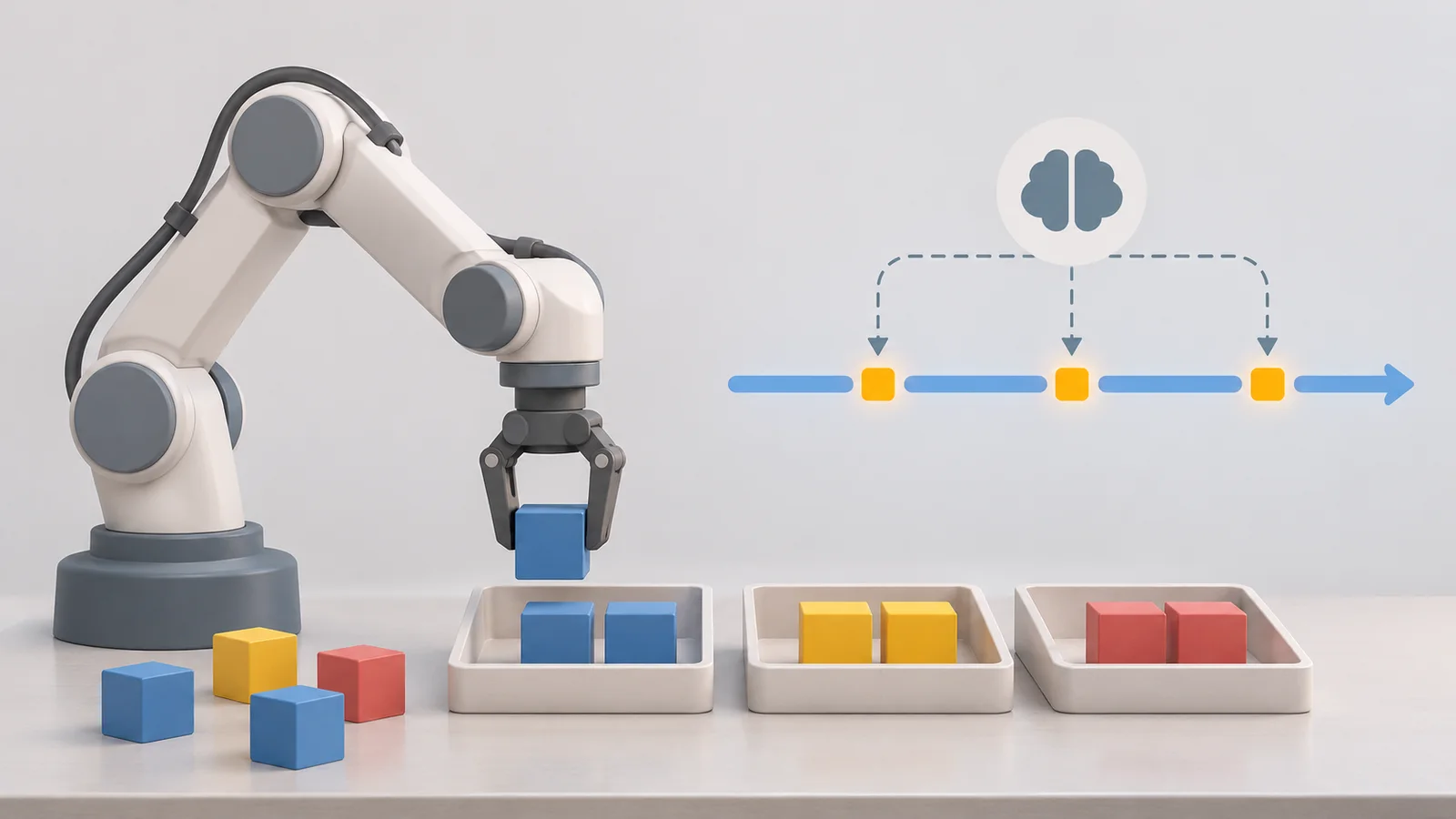
Robotics researchers introduced Reasoning on Call, a control framework that leaves routine manipulation to a low-level policy and brings in a reasoning agent when a task may need correction.
Across the authors’ experiments on the nine-task RMBench simulation suite, Reasoning on Call averaged 99.6% task success, versus 75.6% for a continuously invoked GPT-as-Policy baseline — a difference of 24 percentage points. The same table shows average token use falling from 8.303 million to 2.883 million per episode, a 65.3% reduction by calculation.
Those results are author-run and have not been independently replicated. The comparison also changed the reasoning model along with the control architecture: GPT-as-Policy used GPT-6 Astra at xhigh effort, while Reasoning on Call used GPT-6.1 Sol at xhigh effort. The published results therefore do not isolate the effect of event-triggered review.
The framework separates execution from deliberation. Its online monitor reads temporal visual context and an ordered record of verified interactions, estimates progress on the active subtask and proposes either a successor subtask or task termination.
High-level review is requested when a transition probability crosses a threshold, progress declines, oscillates or stalls, or a critical contact is about to occur before grasp closure or placement release.
Once called, the reasoning agent can approve continued execution, shorten an action sequence, refine a pose or gripper command, take over a subtask, reject an early transition or replace the monitor’s proposed next goal. This split reserves high-level reasoning for selected events while leaving routine execution with the policy.
The researchers ran 30 trials per task for agent-based comparisons. In a separate policy comparison with 100 trials per task, they reported 98.1% average success for Reasoning on Call and 83.0% for MemoryWAM, a 15.1-percentage-point difference. The authors of RMBench describe it as a simulation benchmark with nine manipulation tasks spanning multiple forms of memory complexity.
The team also tested Drawer Sorting, Cover and Reveal, and Tabletop Cleanup on a physical SO-ARM101 robot, running 10 trials for each task. The paper reports success rates of 70%, 80% and 70%, respectively, equal to 22 successes across 30 trials. The authors attributed the remaining failures mainly to difficult grasps that the agent could not correct effectively from visual evidence.
The paper does not report confidence intervals or statistical-significance tests for its headline differences. It reports token consumption rather than end-to-end latency or monetary cost, and the 30-trial physical-robot evaluation does not establish performance in human-shared, safety-critical or production settings. The research package identified no independent replication, peer-review decision, public code, trained checkpoint or raw Reasoning on Call evaluation log.
More news
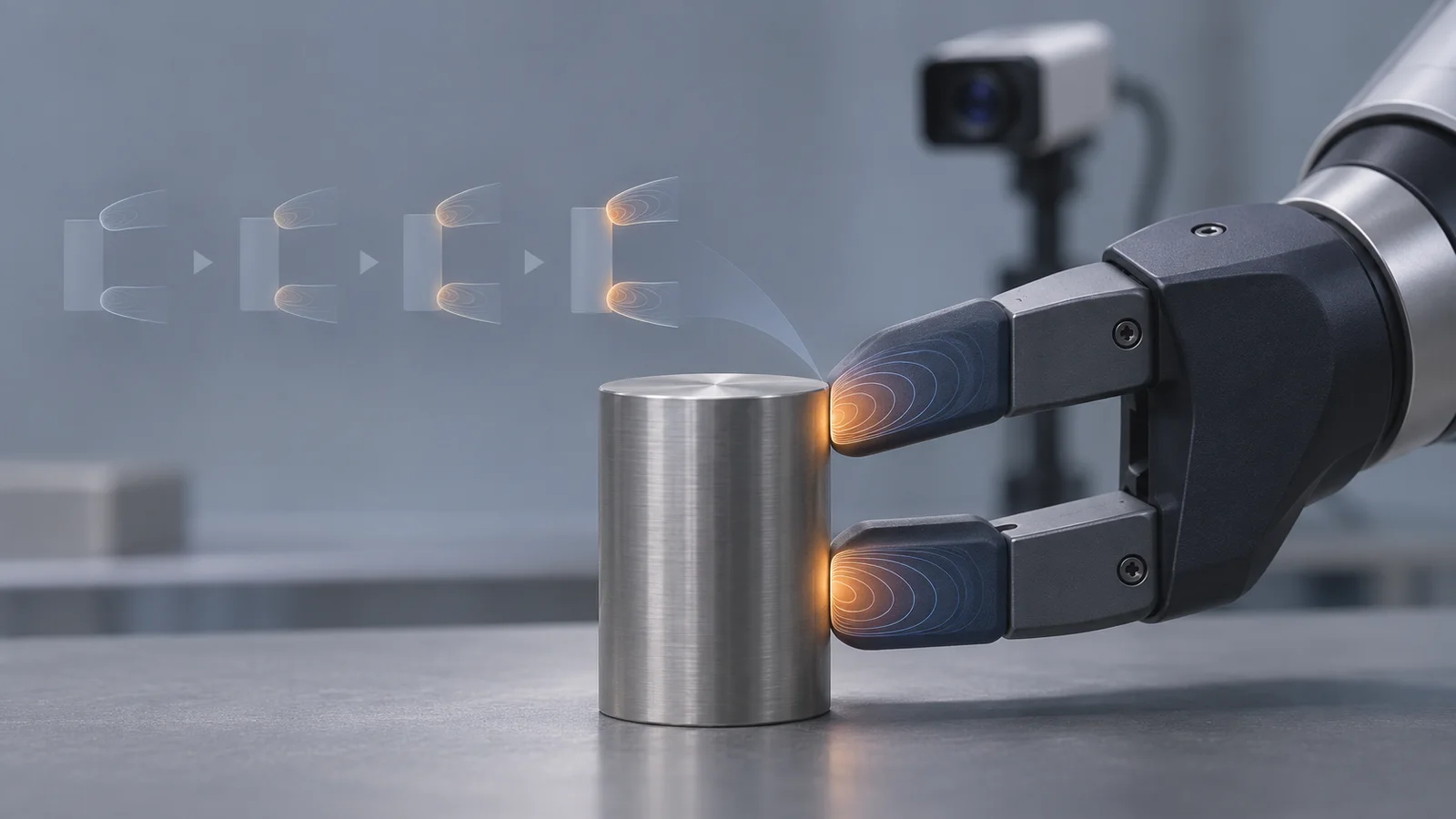
TacInno trains robot policies on tactile changes vision cannot explain
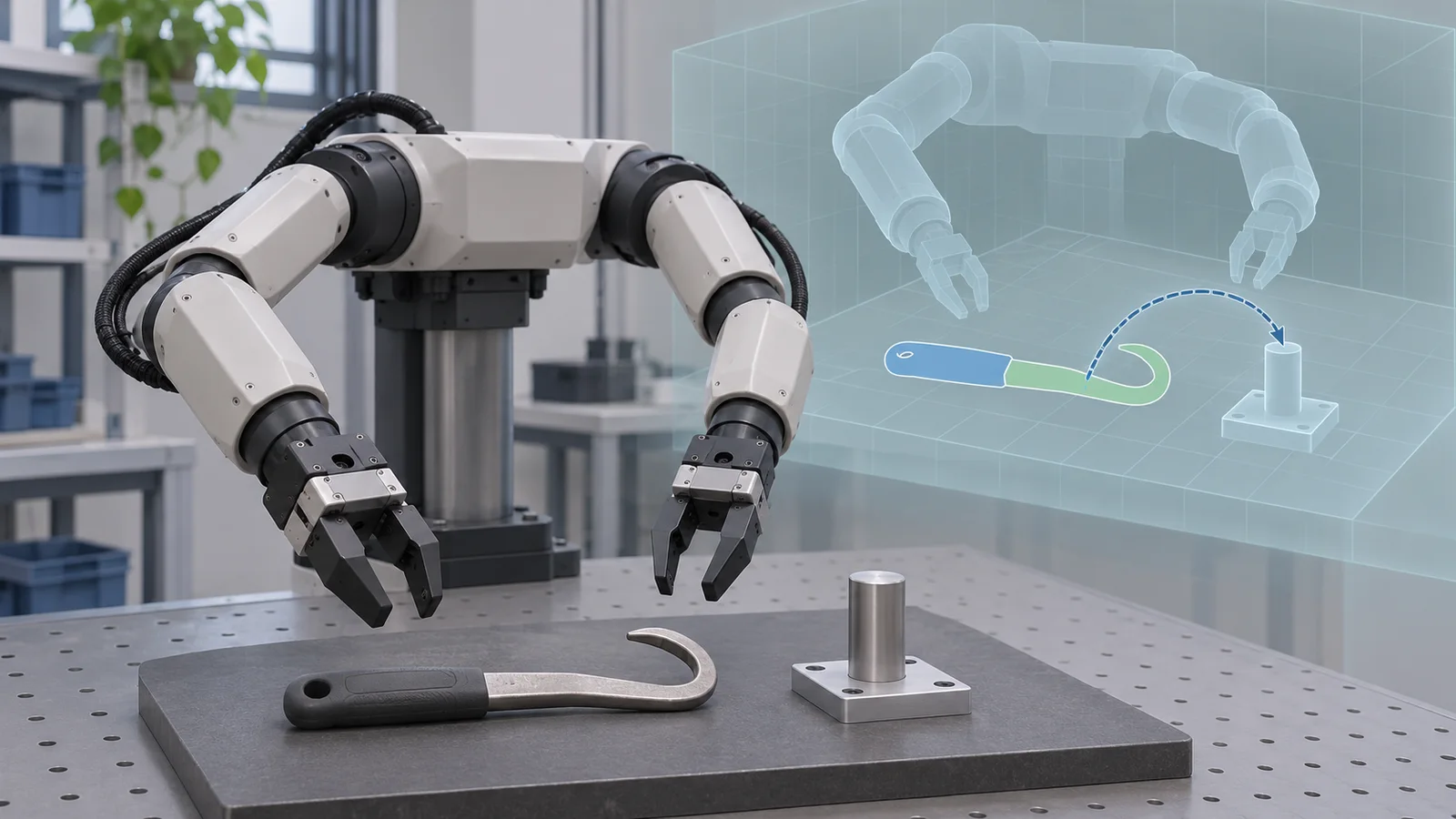
A2-VLA tests unfamiliar tools before steering robot policy

ECHO uses interaction history to adapt humanoid whole-body control