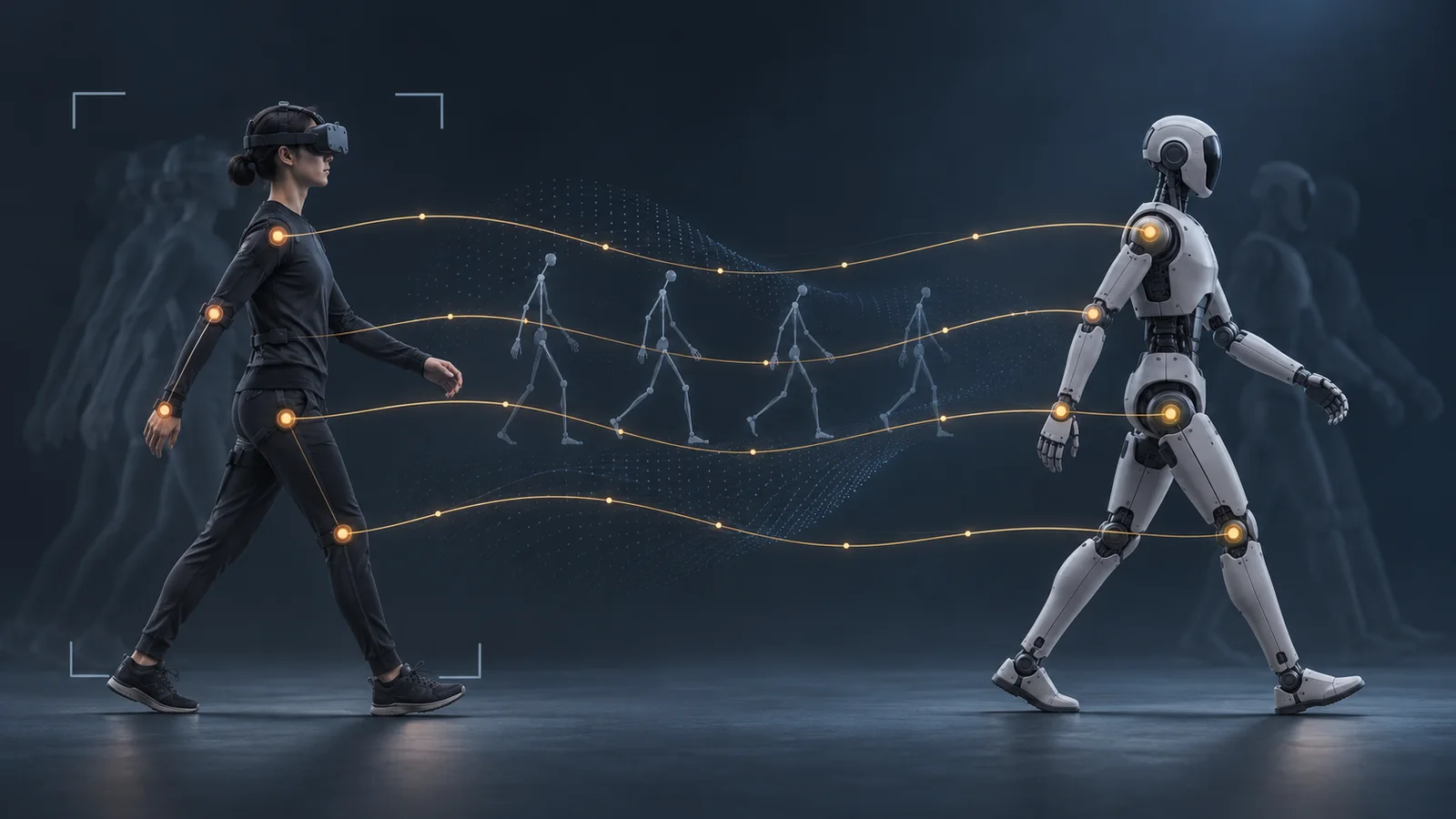
ECHO uses interaction history to adapt humanoid whole-body control
Researchers introduced ECHO, a humanoid behavior foundation model that uses interaction history to adjust a frozen whole-body control prior to changing dynamics and payloads without updating its parameters at deployment.
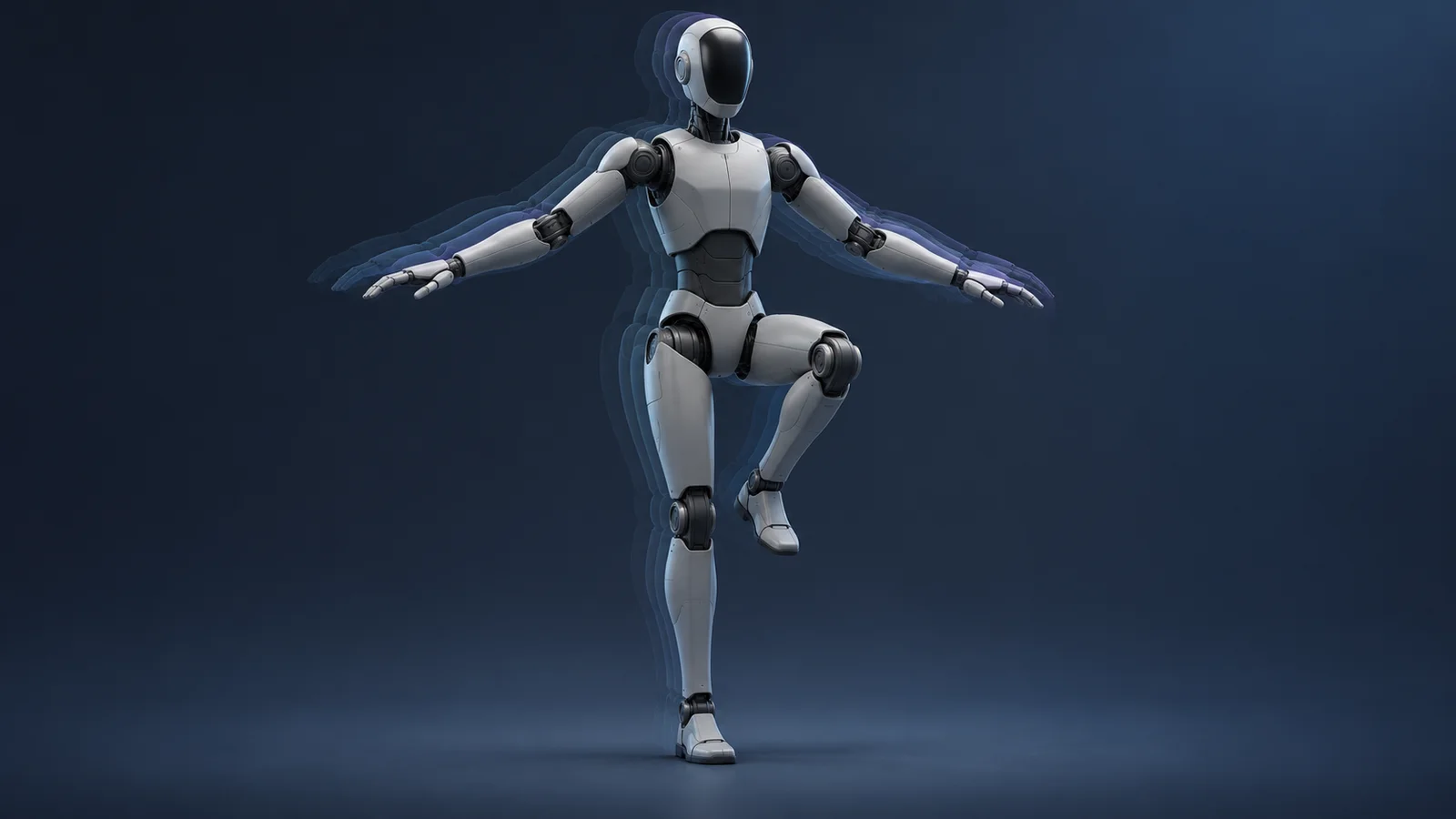
Researchers led by Xingyi Wang introduced ECHO, a humanoid behavior foundation model that uses a robot’s recent interaction history to adapt whole-body control to changing physical conditions. In an arXiv preprint submitted November 19, the authors said ECHO adjusts the actions of a broad, frozen behavior prior without updating model parameters during deployment.
The team deployed ECHO on a Unitree G1 for author-produced demonstrations of crawling and other ground interaction, platform traversal and acrobatics including flips. The paper also shows object manipulation and posture transitions with attached payloads. In one test, the authors said ECHO-H kept the G1 performing single-leg balance, squatting and forward bending with 10 kilograms distributed across its hands and legs. The demonstrations and measurements have not been independently replicated.
ECHO separates broad motion coverage from adaptation to a particular environment. Its base controller, ECHO-PRE, is trained to track a large set of reference motions. A technique called Mixed and Annealed Sampling combines rewinding after failures, uniform exploration and failure-adaptive sampling, then reduces the concentration on difficult segments to broaden practice. The authors report training the system with reinforcement learning on a filtered corpus totaling 1,235.88 hours and 222.46 million motion frames.
A second component, Context Representation and Residual Adaptation, encodes completed histories of the G1’s proprioceptive states and actions. During training, multi-step dynamics prediction and an alignment objective encourage the representation to capture physical properties across motions. The encoder and ECHO-PRE are then frozen, and a residual actor learns a correction that is added to the prior’s action. Privileged physical parameters and robot states provide training supervision, but the authors say deployment relies on interaction history rather than direct access to those parameters.
In the authors’ three-run simulation test on the in-distribution BONES-SEED-100-HighDynamic benchmark, ECHO-N recorded a mean success rate of 0.7633, compared with 0.7200 for ECHO-PRE, 0.6200 for HEFT and 0.5800 for SONIC v1.1. Under the paper’s Heavy Domain Randomization protocol, ECHO-H produced the best result on four of five listed metrics, including a 0.8922 success rate versus 0.8827 for RMA-Teacher and 0.8700 for RMA-Student. Those figures are author-reported results under the team’s evaluation protocol, not independently validated benchmark results.
The paper’s physical-robot evaluation covered four reference motions. Without added payload, the authors report that ECHO-N had the lowest mean local joint-position error in each comparison. With two kilograms attached to each lower leg, ECHO-H had the lowest mean error in all four comparisons. Each numerical table entry represented 10 successful trials, while HEFT and SONIC failed some motions.
ECHO is distinct from Awaken-HI’s humanoid training model, which was submitted to arXiv later on November 19. Awaken-HI is a vision-language-action model for humanoid loco-manipulation trained on a claimed 50,000 hours of synchronized human experience. ECHO instead focuses on reference-conditioned whole-body tracking and dynamics adaptation from the robot’s own interaction history.
The authors say context learning still depends on simulated rollouts and privileged supervision. They also say adaptation to unannounced physical changes within a session remains insufficiently explored. Evaluation is limited to the Unitree G1, and transfer to other robot bodies or integration with autonomous task planning has not been tested.
More news
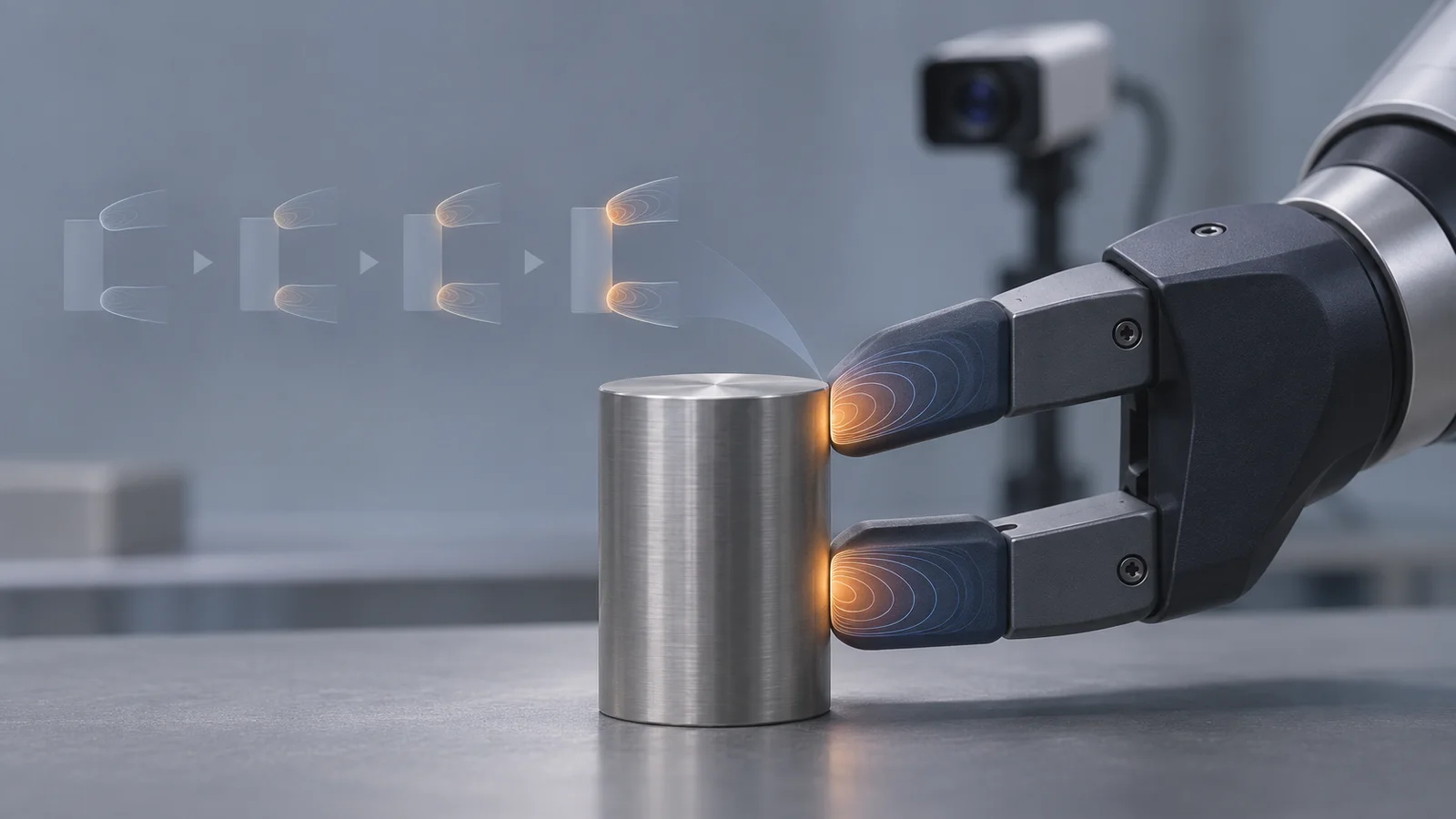
TacInno trains robot policies on tactile changes vision cannot explain
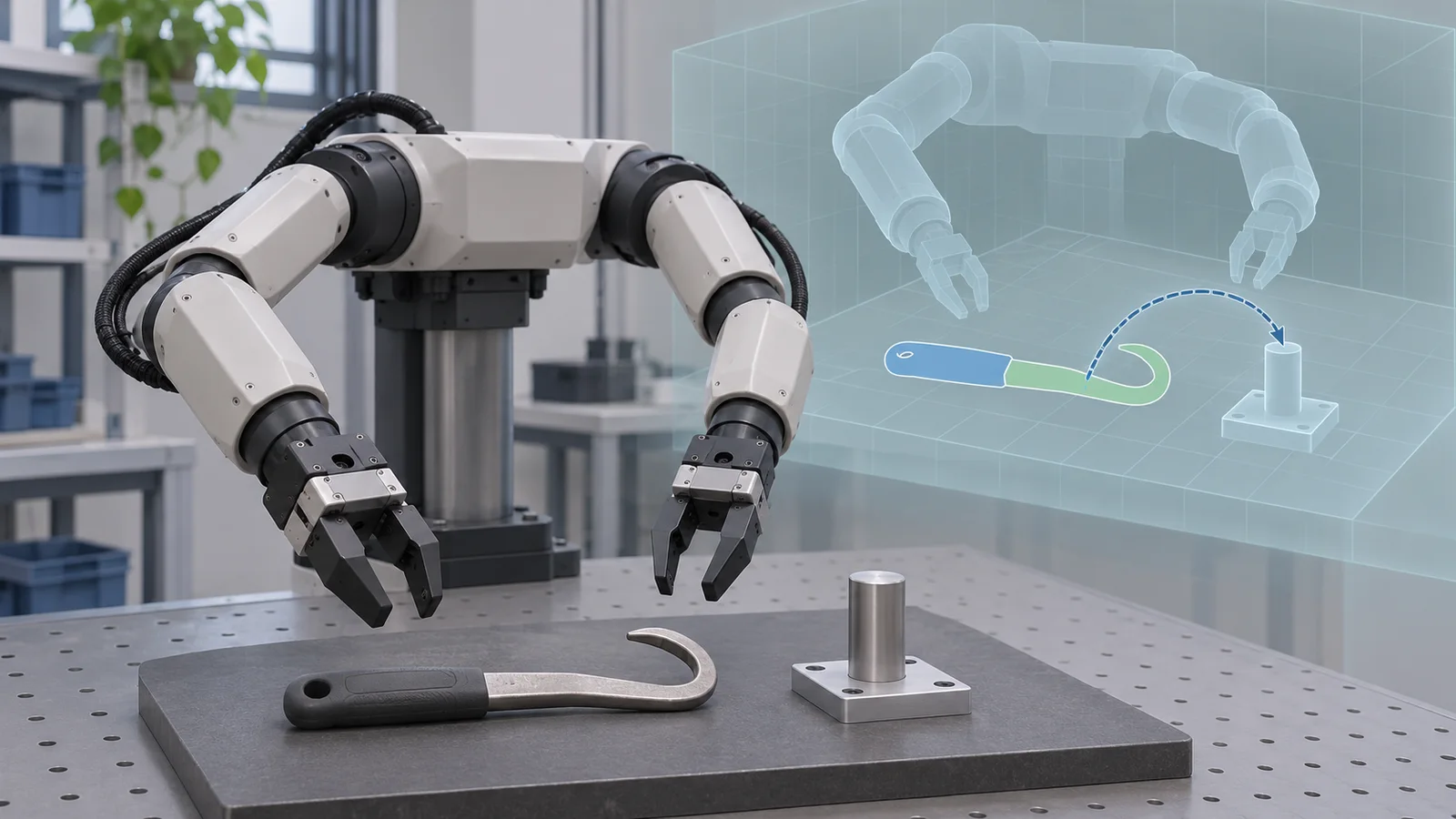
A2-VLA tests unfamiliar tools before steering robot policy
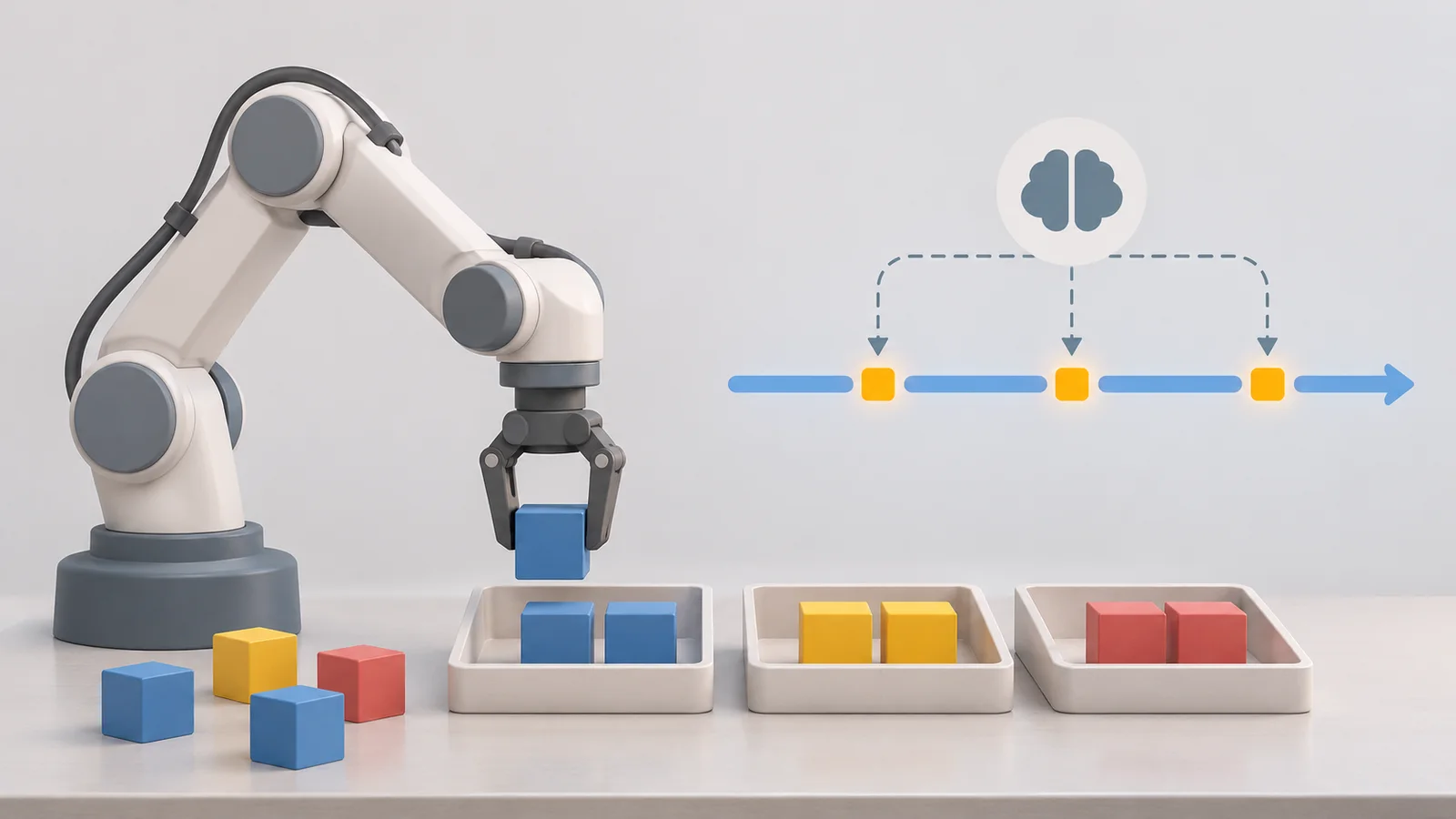
Reasoning on Call triggers agent review during robot tasks