SpaceXAI deploys Grok Bot across customer support
SpaceXAI says Grok Bot now investigates tickets, responds to customers, processes refunds, manages queues, detects incidents and analyzes product feedback after a staged rollout that began with human approval for every write action.
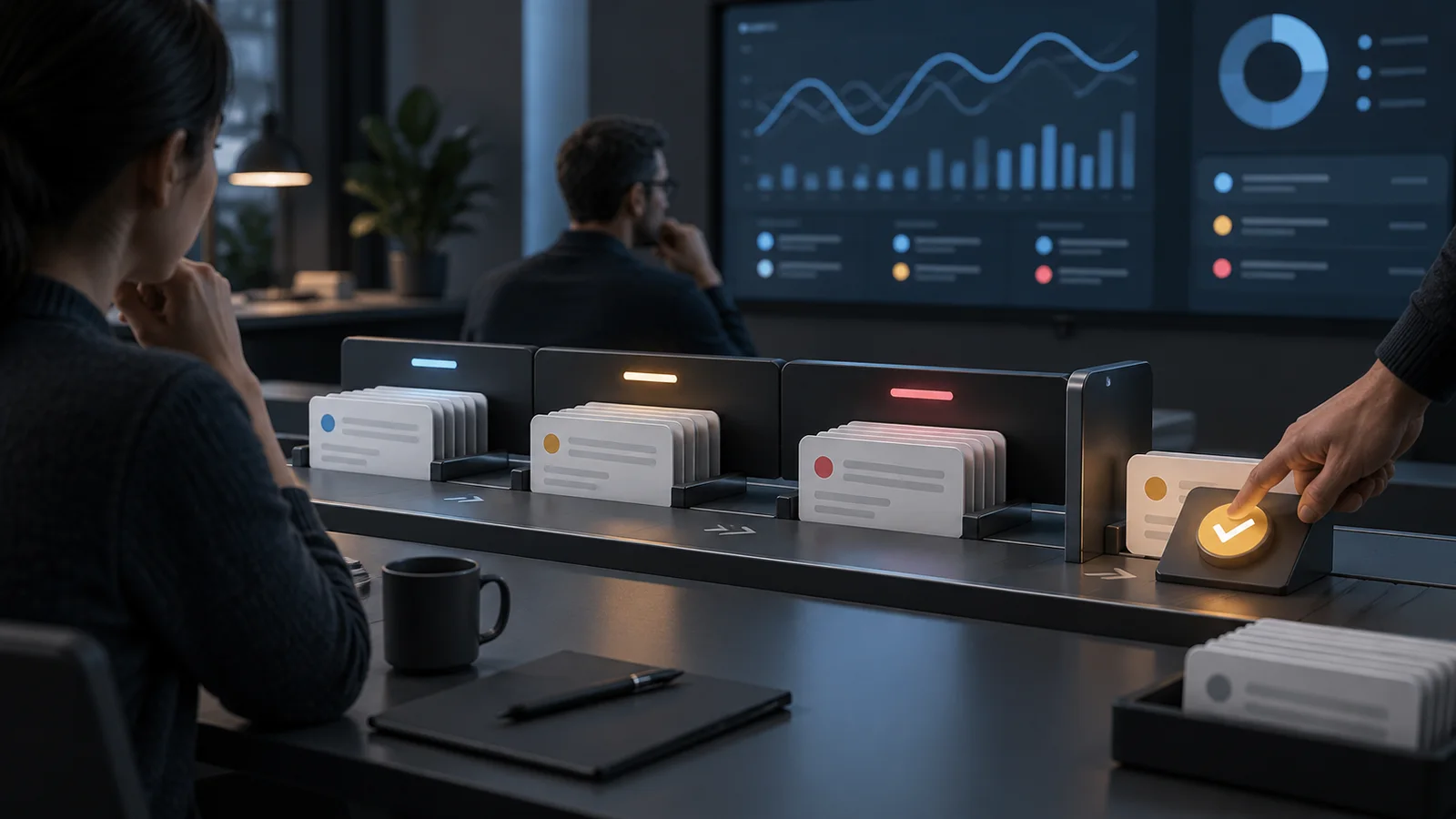
SpaceXAI deployed Grok Bot across the combined SpaceXAI and Cursor customer-support operation, assigning the agent work in ticket investigation, customer responses, refunds, queue management, incident detection and product-feedback analysis. The company says the rollout let its support team absorb a 175% increase in tickets without adding staff, but it did not disclose the underlying counts, measurement period or data needed to verify that claim.
The persistent agent works at both the ticket and operation levels. SpaceXAI says Grok Bot pre-investigates every incoming ticket. It can check known issues in Linear, consult Datadog signals, add information to an existing engineering issue or create a new one, and record a video reproducing a problem. It can also draft or send a customer response, depending on its permissions.
SpaceXAI says it introduced those permissions in stages. Grok Bot initially connected to Plain and Linear, operated only through internal notes and required human approval for every write action. The team added traces and evaluations to each run, then started with the least complex tickets. On the first day, staff manually reviewed the agent’s interpretation and proposed reply for accuracy, tone and instruction-following. By the end of that day, the company allowed direct customer responses before gradually expanding the agent’s scope.
Separate approval documentation says Grok Bot supports both “Ask first” and “Allow automatically” rules, with the approval requirement taking precedence. Enterprise documentation says administrators can lock those rules and that the hosted computer-use agent has no account or plugin access by default, acting only through accounts and plugins granted by a user or team. Those documents establish that the controls exist, but not the exact settings used throughout the support deployment.
For broader product context, see SpaceXAI’s Grok 4.7 launch.
Beyond individual tickets, SpaceXAI says Grok Bot continuously monitors inbound volume, reprioritizes and reassigns work, warns when response-time service levels are at risk and can declare an incident when issue volume reaches a configured threshold. The company also says the agent reviews human- and bot-handled conversations, identifies coaching opportunities, sends leadership a weekly summary of weak AI responses, proposes help-center updates after code changes and flags conversations with more than three back-and-forth exchanges for management review.
SpaceXAI attributes several operating figures to the system. It estimates that handling the ticket increase through hiring could have required 200 additional people. It also says minor optimizations brought Grok Bot’s resolution cost to $0.20 to $0.30 per ticket, compared with an asserted $1 to $4 flat fee for traditional AI support tools. The company did not identify comparison vendors or explain its cost accounting, quality adjustments, treatment of failed or reopened tickets, or the model behind the hiring estimate. No independent corroboration for either figure appears in the supplied evidence.
SpaceXAI also says it trained Grok Bot on more than one million customer interactions, that the agent resolves 99% of refund requests without human intervention and that it synthesizes more than 20,000 product-feedback points from support tickets each day. The post does not provide sample sizes, accuracy or error rates, a definition of a feedback point, or details about the training-data period, consent and evaluation design. It also does not disclose what share of all tickets the bot fully resolves rather than assists.
The refund claim differs from a September 9 support guide, which presents a workflow in which Grok Bot recommends granting or denying a refund and a person approves the action; the guide labels its numbers and details illustrative. The September 22 deployment account does not say whether the 99% figure reflects a later autonomy setting or a different internal workflow.
More news

Stack Overflow says ChatGPT plugin tripled agent signups
OpenAI says Third Moment runs 10,000 research agents at once

OpenAI details Amp’s agent expansion beyond coding