Agility Robotics starts Nasdaq trading after SPAC deal
Agility Robotics began trading under AGLT after its combination with Churchill Capital Corp XI brought in about $465 million in gross capital. Filings also lay out conditional orders, illustrative economics and commercialization risks.
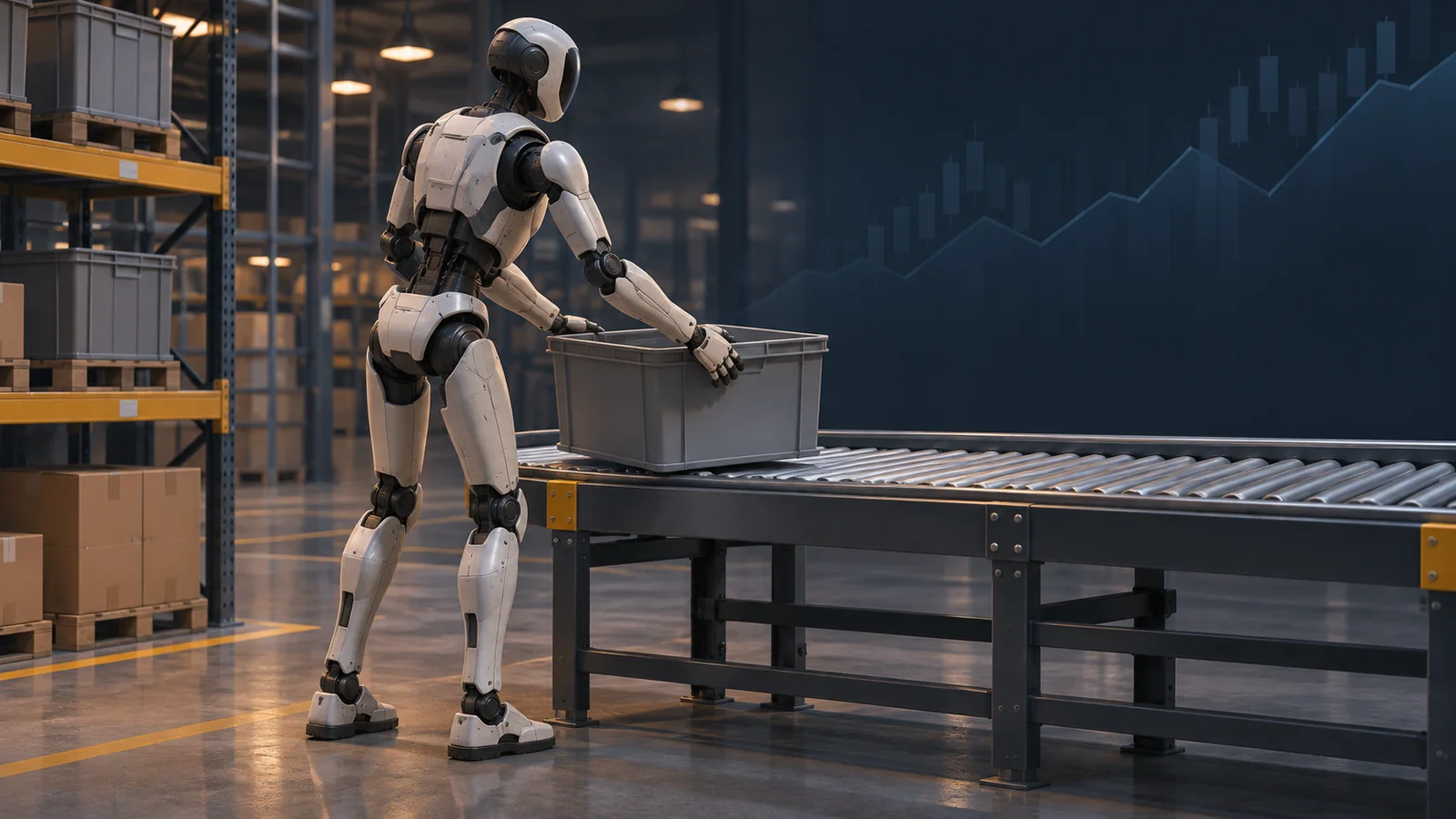
Agility Robotics began trading on Nasdaq on November 5 under the ticker AGLT after completing its business combination with Churchill Capital Corp XI. The deal and related financings provided about $465 million in gross capital before expenses, according to the company. Warrants began trading under AGLTW.
A pre-closing SEC filing put estimated gross proceeds at about $465.1 million: approximately $164.1 million from Churchill’s trust account, $201 million from a private investment in public equity and $100 million in equity funding that Agility had already received. Churchill said shareholders redeemed 25,451,804 Class A shares, or about 61.5% of those outstanding at the redemption deadline, removing roughly $261.8 million from the trust.
Agility plans to use the capital to commercialize Digit, its humanoid robot for material-handling work. The company says it has more than $300 million in committed, multi-year orders for Digit 5. Realizing that amount, however, depends on contractual milestones and product features and specifications; it is not current-period revenue.
An investor presentation filed with the SEC says the order value covers 1,000 Digit 5 robots under a three-year robots-as-a-service contract. Customer warrants tied to the agreement vest proportionately as robots are deployed. The customer was not identified in the opened materials, and the sources do not say how many units have been delivered or how much related revenue has been recognized.
The company’s illustrative robots-as-a-service model assumes a roughly $25,000 deployment fee and an $8,500 monthly subscription covering software and maintenance. Its illustrative ownership model assumes a $200,000 hardware purchase, about $20,000 for deployment and $36,000 a year for software and maintenance. Management models about $500,000 in cumulative five-year revenue per robot under the subscription model and roughly $400,000 under ownership. Those figures are scenarios, not guaranteed results.
The same presentation estimates that Digit 5’s bill of materials will cost about $150,000 at launch, declining to about $75,000 at annual production of 1,000 units and about $30,000 at 10,000 units. Those reductions depend on scale efficiencies that have not been demonstrated at the modeled volumes. The presentation also assumes approximately $15,000 in one-time deployment costs to Agility and about $15,000 a year in software and maintenance costs, excluding corporate selling, general and administrative, and research-and-development expenses.
Agility’s definitive prospectus says the company has recorded net losses since inception and expects operating and net losses for the foreseeable future. Before accounting for the proposed combination, Agility said its existing cash and equivalents were insufficient to fund operations and obligations for at least one year, creating substantial doubt about its ability to continue as a going concern. The opened sources do not give net proceeds after final transaction expenses or establish whether the completed financing removed that doubt.
The prospectus lists limited commercialization experience, uncertain unit economics, customer concentration, production scaling, supply-chain exposure, product safety, AI behavior, regulation, cybersecurity and competition among the material risks. Agility reports more than 65,000 hours of real-world robot operation, a company-supplied metric that has not been independently audited. It names GXO, Schaeffler and Toyota Motor Manufacturing Canada as enterprises where Digit is operating or commercially deployed.
Agility says its 70,000-square-foot RoboFab facility in Salem, Oregon, is designed to produce as many as 10,000 robots a year. That is designed capacity, not current output. The company is targeting early customer access to Digit 5 in the first half of 2027 and general availability by the end of 2027.
More news

Anthropic names eight brokers for proposed Australian retail IPO offer
Foundry Robotics raises $100 million for Emeryville factory

Anthropic files S-1 for proposed initial public offering