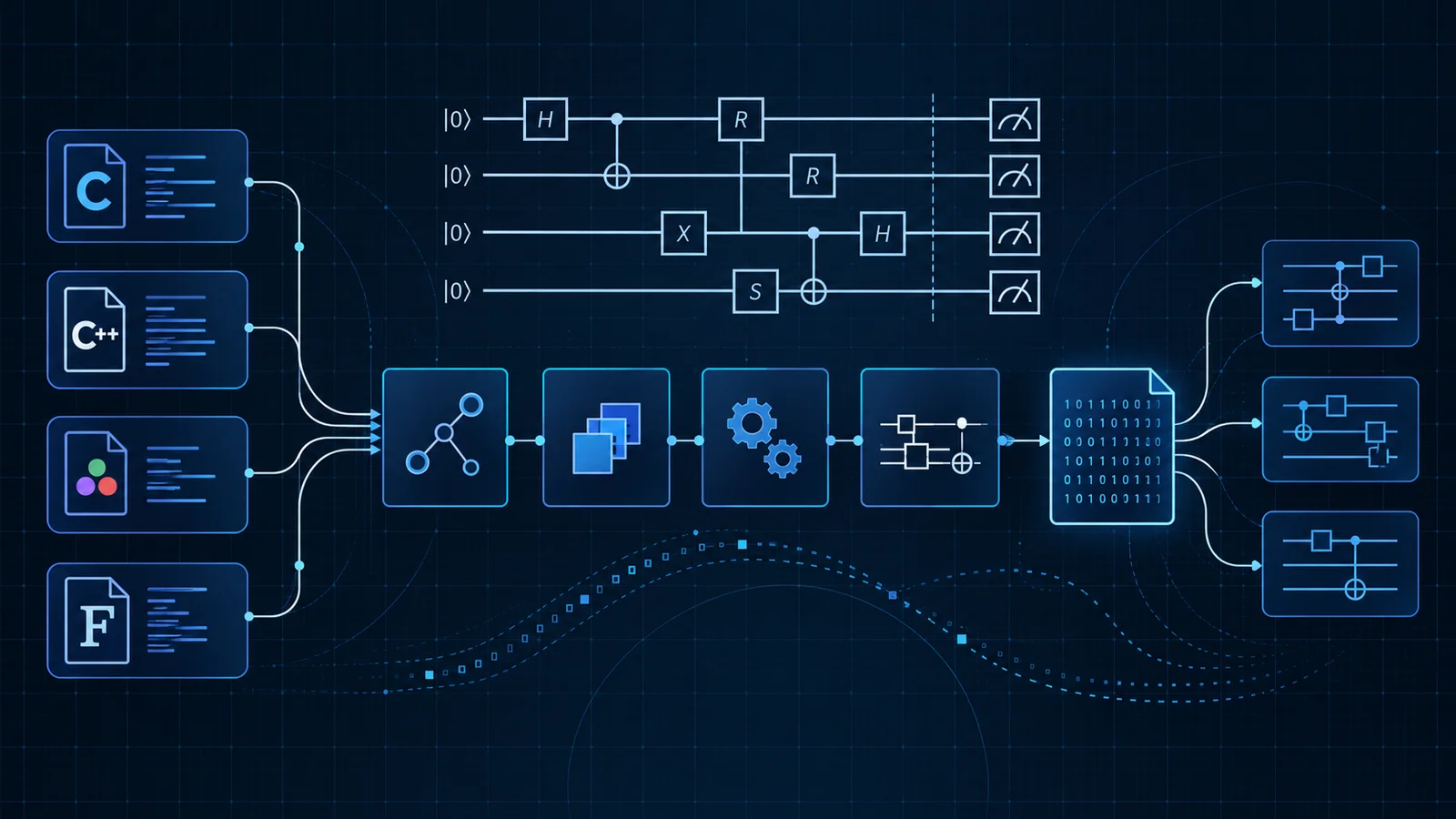
IBM exposes quantum error-mitigation controls through Executor
IBM’s beta directed-execution model adds an Executor primitive and moves quantum-circuit transformation, randomization and mitigation choices into inspectable client-side workflows.

IBM introduced a directed-execution model on Oct. 5, moving quantum-circuit transformation, randomization and error-mitigation logic into client-side tools. IBM’s cloud service still generates circuit variants and runs them on quantum hardware, while researchers can inspect and customize steps that its higher-level primitives previously handled behind their interfaces.
At the center of the model is Executor, a lower-level execution primitive. IBM’s directed-execution documentation says Executor receives a template circuit and a samplex plan, generates and binds parameter values, submits the resulting circuits to hardware, and returns results with metadata. The Executor quickstart says the primitive makes no implicit workflow decisions and includes no built-in error suppression or mitigation. Researchers instead compose those steps with client-side tools and directives.
Before execution, IBM’s Samplomatic tool converts boxed, annotated circuits into a parameterized template circuit and a samplex that specifies how the template should be sampled. Because the plan is created on the client, researchers can inspect and sample it locally before sending a workload to hardware.
The beta controls cover techniques already used by IBM’s Sampler and Estimator primitives, including Pauli twirling, noise-model learning and injection, and basis changes. The client records the intended transformations and randomizations, while IBM Quantum Compute Service performs the more expensive work of generating and executing circuit variants.
Researchers do not need to work directly with Executor. IBM Quantum Compute client release 0.50.0, dated Sept. 24, added client-side Sampler and Estimator implementations that handle preprocessing and postprocessing locally and delegate hardware execution to Executor. IBM says they share the legacy primitives’ API, so switching requires only an import change in virtually all cases while preserving the existing higher-level inputs and outputs.
That release also deprecated the legacy server-side EstimatorV2 and SamplerV2 implementations. IBM says the client-side versions will become the top-level defaults in a future release. The Qiskit IBM Runtime repository contains the corresponding client code.
Separately, IBM recently added a self-hosted deployment option for its Bob development platform, another product change that gives customers more control over where IBM software runs.
IBM says Executor can handle workloads with 5,000 or more randomizations without sacrificing performance. The opened materials do not provide an independent benchmark for that claim. IBM’s documentation labels every component of the directed-execution model as beta and warns that the components may not be stable.
More news

Oracle and NVIDIA make Vera Rubin NVL72 and Vera CPUs available on OCI

IBM links two Nighthawk quantum processors with four meter-scale L-couplers

IBM makes Spyre a first-class PyTorch backend