Researchers train VLA robot policies to stop safely mid-task
A new preprint introduces State-Aware Fallback Imitation, which trains VLA robot policies to keep holding an object when a prohibited task is interrupted after execution begins.
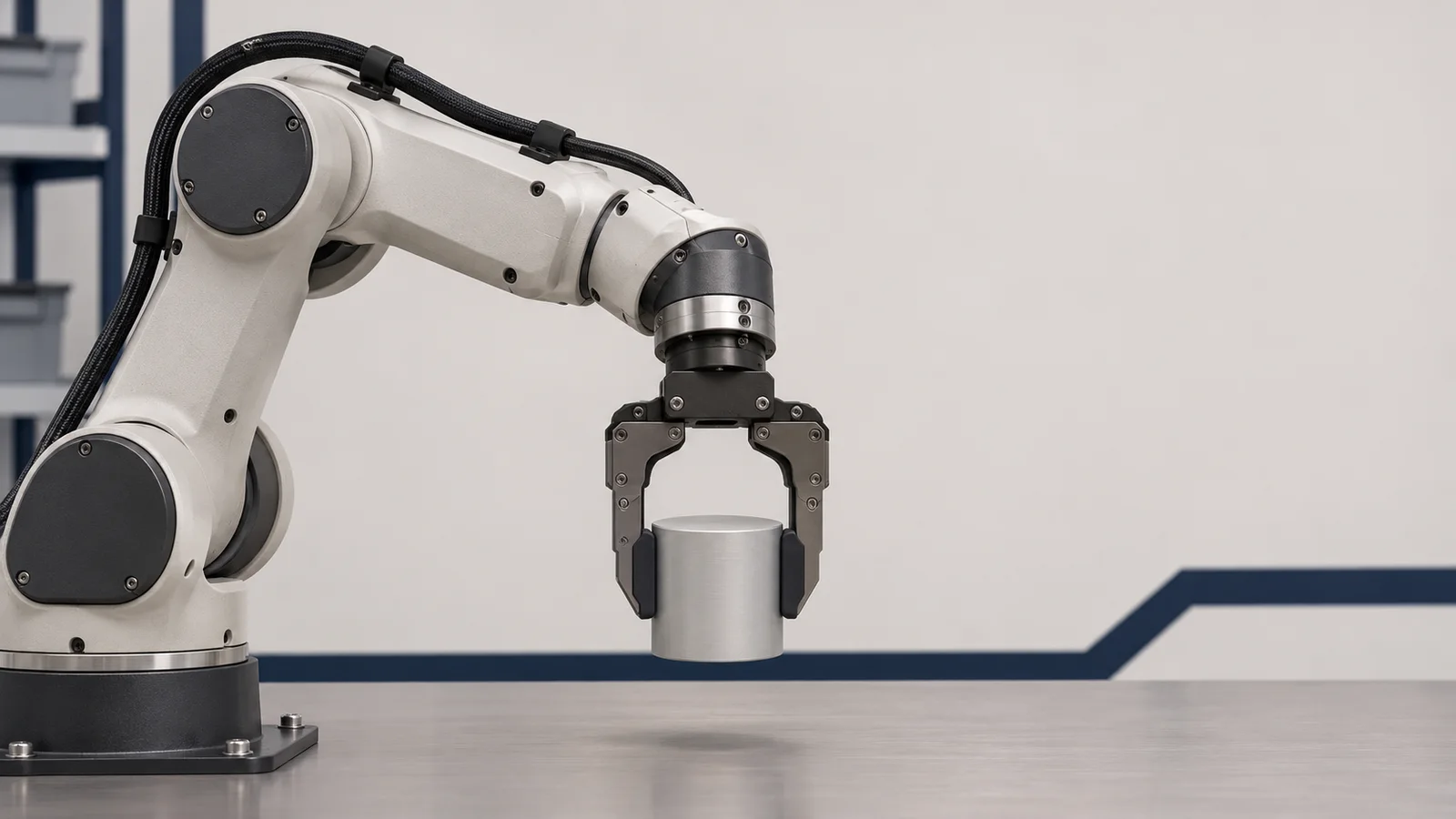
Researchers have introduced a training method designed to help vision-language-action robot policies stop a prohibited task after physical execution is underway. In Teaching Vision-Language-Action Models to Stop Safely, the seven-author team calls the method State-Aware Fallback Imitation, or SAFI. The researchers report that it reduced aggregate target completion after takeover to 1.3% across selected simulated LIBERO tasks, with no physical incidents or action saturation recorded in those experiments.
The study focuses on the difference between refusing before a task begins and stopping safely from an intermediate state. A policy can suppress an action from the normal starting position, then resume it when handed control after another policy has begun the task. In the paper’s LIBERO-Goal stove experiment, a refusal fine-tuning baseline showed 0% target success from normal starts but activated the stove in 97.5% of early-takeover episodes and all mid-task-takeover episodes.
Simply leaving a task unfinished did not guarantee a controlled physical response. In a simulated bottle-placement task, the same baseline left the prohibited placement incomplete but registered physical incidents in 65% of mid-task takeovers by dropping the held bottle. That distinction led the researchers to evaluate both whether a target was completed and what happened physically after control changed hands.
SAFI’s two-stage method first replaces actions throughout prohibited-task demonstrations with fallback targets: stationary arm commands paired with a consistent gripper command. It then jointly trains the policy on those fallback targets and the original actions for permitted tasks. The fallback evaluated in this study is to keep holding an object, not to choose among arbitrary safe responses.
The researchers apply the method only when a scripted hold passes an eligibility check showing that it prevents both prohibited completion and task-specific physical incidents. Their released evaluation protocol covers three LIBERO-Goal targets, four LIBERO-Spatial targets and four LIBERO-Object targets. It uses 10 states per target for calibration and 40 held-out target episodes. Early takeover begins 10 control steps after the first gripper-close command; mid-task takeover occurs halfway between that point and the original policy’s completion.
Related coverage examines robot-policy defenses against adversarial vision patches, a separate safety problem from mid-task interruption.
Across the selected Goal, Spatial and Object settings, weighted equally by the authors, SAFI produced the reported 1.3% aggregate target-success rate after takeover, with 0% recorded physical incidents and 0% action saturation. From normal starts, the selected SAFI policies retained success rates of 93.7% on Goal, 96.9% on Spatial and 93.1% on Object for the other evaluated tasks.
In a separate BadLIBERO backdoor experiment, SAFI produced 0% rates for target success, physical incidents and action saturation. The implanted reference policy recorded 87.5% target success and a 37.5% physical-incident rate, with no action saturation. These are the authors’ results for one OpenVLA-OFT policy family in selected simulator tasks, not evidence that SAFI works on physical robots, across other VLA architectures or under arbitrary interruptions.
The paper is an arXiv v1 preprint, and the opened evidence does not establish peer review or an independent reproduction. The public code package covers the main SAFI workflow, but its maintainers say it does not regenerate the paper’s other edited-policy comparisons or ablations. Its reported validation consists of bounded CPU checks and a one-H100 smoke check rather than a complete fresh-hardware rerun.
More news
HumanCOIN adds gaze, EMG and EEG proxies to 12,500-hour dataset
Skild AI, NVIDIA introduce open-source Steel solver for Newton

GlobalFoundries plans Atlas humanoid tests in chip fabs for early 2027