IBM says DARPA moved its quantum computing plan to Stage C
IBM says its fault-tolerant quantum computing approach has reached the final stage of DARPA's Quantum Benchmarking Initiative, starting independent verification rather than proving the proposed system works.
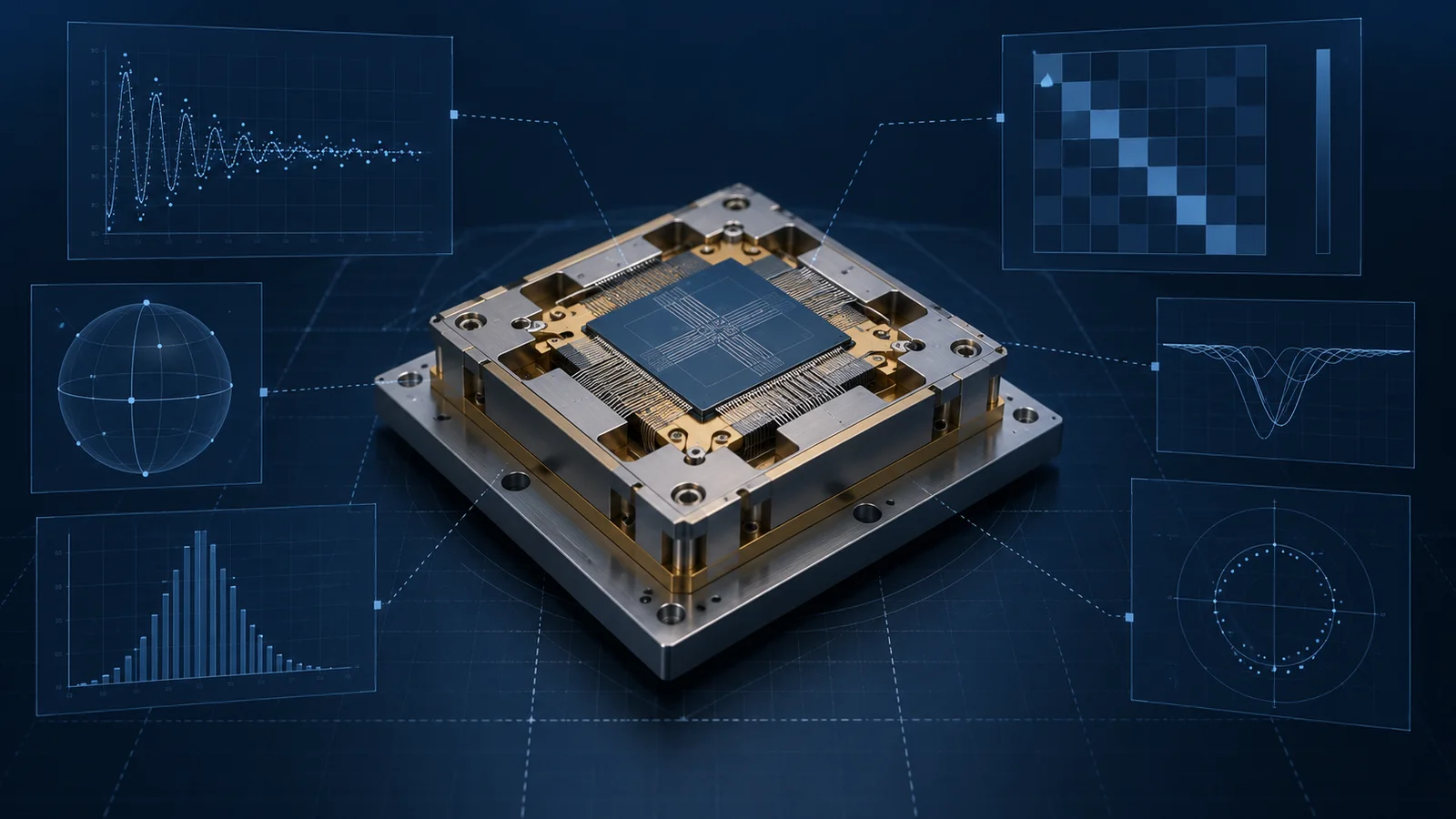
IBM said the Defense Advanced Research Projects Agency selected its fault-tolerant quantum computing approach for Stage C of the agency’s Quantum Benchmarking Initiative, moving the plan into independent verification and validation.
Stage C is QBI’s final phase. A government team will assess whether IBM’s proposed utility-scale quantum computer can be constructed as designed and operated as intended, according to DARPA’s program description. DARPA defines utility-scale operation as producing computational value greater than the system’s cost. The initiative is designed to determine whether an industrially useful quantum computer can be built by 2033.
IBM said independent experts will test and measure its hardware, technology, systems engineering and architectures during verification. That goes beyond Stage B, which focused on R&D plans, technical risks and risk-reduction prototypes. DARPA’s Stage B record identified IBM’s approach as quantum computing with modular superconducting processors. The system-level review is separate from IBM’s work to expose quantum error-mitigation controls through Executor for current circuit workflows.
Selection for Stage C does not mean IBM has already built or successfully operated the proposed system. The reviewed sources included no Stage C test results or completed government findings for IBM. DARPA’s public QBI and Stage B pages describe the evaluation process and IBM’s earlier Stage B position, but they do not independently announce IBM’s promotion. That claim currently comes from IBM’s October 7 announcement.
IBM Research director Jay Gambetta said the company “expects to deliver the first fault-tolerant system in 2029.” The date and the claim that IBM would be first are company forecasts, not demonstrated outcomes. The available sources do not disclose IBM-specific Stage C test protocols, pass thresholds, schedule, cost or contract value.
DARPA has framed the broader effort cautiously. At QBI’s launch, program manager Joe Altepeter said the agency’s starting position was skepticism that a sufficiently large, fully fault-tolerant quantum computer could be built. A related DARPA program page says verification of a utility-scale design, its components and its integration would likely be a difficult, multi-year process. DARPA also says QBI is not a winner-take-all contest: multiple participants, one participant or none may ultimately demonstrate a path to an industrially useful system.
More news
IBM brings native Qiskit development to Fortran, C++ and Julia
IBM researchers prove theoretical quantum advantages over bounded language models
IBM says joint team reached 2026 Gordon Bell Prize finals